
A reflection on Essentials of Abnormal Psychology in a Changing World, Fifth Canadian Edition, by Jeffrey S. Nevid, Spencer A. Rathus, Beverly Greene, and Linda Knight
Introduction
Essentials of Abnormal Psychology in a Changing World examines psychological disorders, their possible causes, their effects on individuals and families, and the different approaches used in assessment and treatment.
The book also raises a more difficult question: what does it mean to describe a person’s thoughts, emotions, or behaviour as abnormal?
At first, the answer may appear straightforward. Behaviour might be considered abnormal when it is unusual, distressing, irrational, dangerous, or disruptive. However, each of these standards has limitations.
Unusual behaviour is not automatically harmful. Common behaviour is not automatically healthy. Emotional distress may be a reasonable response to grief, loss, discrimination, trauma, financial pressure, workplace conflict, or social isolation. Behaviour that is accepted in one cultural setting may be misunderstood in another.
The book therefore encourages a more careful examination of psychological functioning. Rather than relying on one definition, abnormal psychology considers distress, impairment, risk, cultural expectations, personal circumstances, duration, and the individual’s ability to function.
Psychological suffering cannot be understood by examining symptoms alone. We must also examine the life, environment, culture, relationships, and experiences surrounding the person.
This principle connects strongly with organizational behaviour and Standing on the Ledge. Both require us to look beyond visible behaviour and ask what pressures, losses, systems, and experiences may be contributing to it.
Understanding Abnormality
One of the first lessons from abnormal psychology is that there is no perfect dividing line between normal and abnormal behaviour.
Many psychological symptoms exist on a continuum. Everyone experiences fear, sadness, anger, distraction, unusual thoughts, sleep disruption, or periods of low motivation. These experiences become more concerning when they are intense, persistent, difficult to control, or significantly interfere with daily functioning.
Context also matters. Fear may be reasonable when danger is present. Sadness may be expected after a major loss. Suspicion may develop after betrayal. Withdrawal may serve as temporary protection when a person feels overwhelmed.
The behaviour should therefore be examined in relation to the circumstances in which it developed.
Four factors are often useful when considering whether psychological experiences may require attention:
- Personal distress
- Impairment in daily functioning
- Risk of harm
- Departure from cultural or social expectations
None of these factors should be used alone. A person may experience severe distress while continuing to work and appear functional. Another person may behave unusually without experiencing distress or impairment.
This has an important application to Standing on the Ledge. Outward functioning should not be treated as proof that someone is well. People can continue working, communicating, and meeting responsibilities while experiencing significant internal distress.
The ability to continue functioning does not mean that functioning is painless or sustainable.
Historical Views of Psychological Disorders
The history of abnormal psychology shows that psychological disorders have been explained in many different ways.
Some early cultures attributed disturbed behaviour to supernatural forces, possession, curses, or moral weakness. Later explanations increasingly focused on biological illness, psychological conflict, learning, thought patterns, relationships, and social conditions.
This history matters because older attitudes have not disappeared completely. People experiencing psychological difficulties may still be described as weak, unstable, dangerous, attention seeking, or lacking discipline.
These judgments can discourage people from seeking assistance. They can also cause families, workplaces, and institutions to respond with punishment rather than support.
The development of more humane treatment represents an important change. Psychological disorders came to be viewed less as evidence of moral failure and more as conditions requiring assessment, understanding, and appropriate intervention.
However, even modern systems can become impersonal. Diagnosis can help identify patterns and guide treatment, but a person must never be reduced to a diagnostic label.
A diagnosis describes a pattern of symptoms. It does not fully describe the person’s identity, character, history, abilities, or future.
The Biopsychosocial Perspective
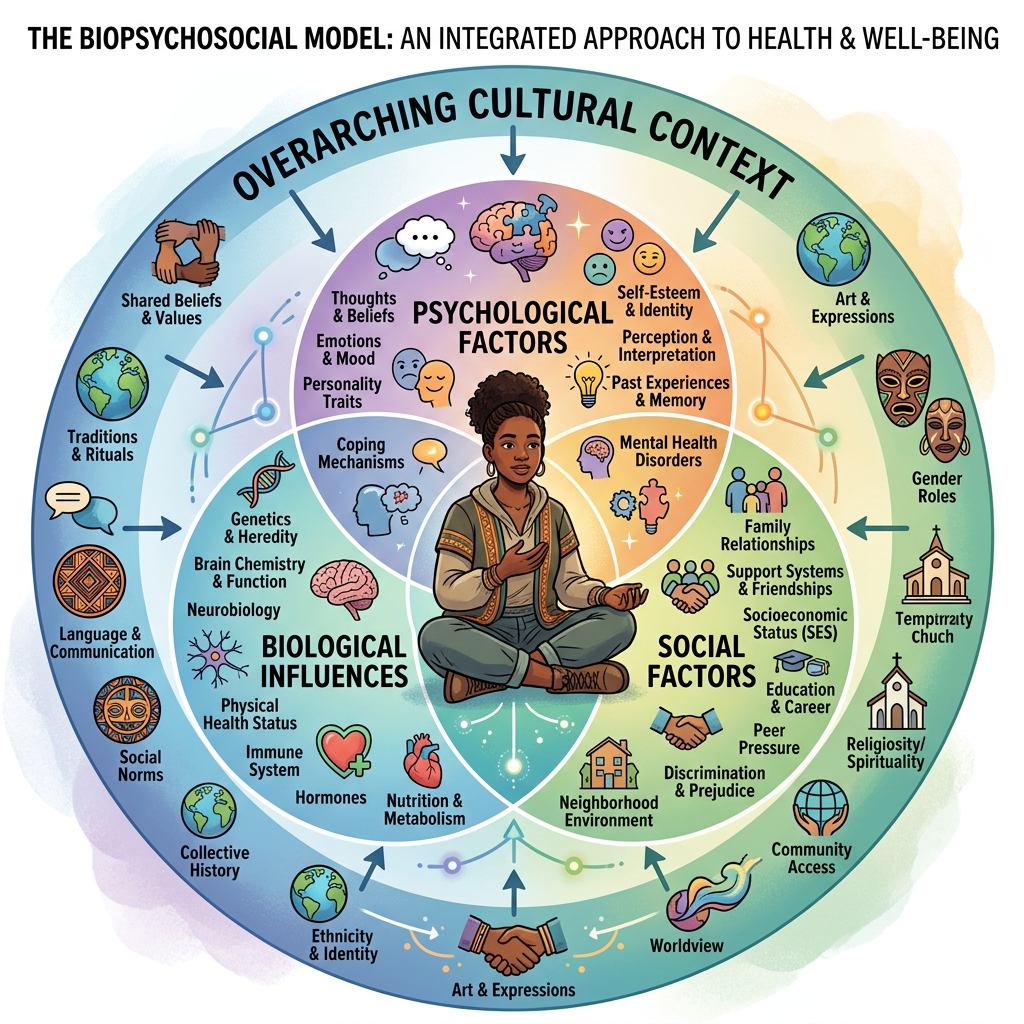
One of the strongest concepts in the book is the biopsychosocial approach. This perspective recognizes that psychological disorders may develop through interactions among biological, psychological, and social factors.
Biological influences may include genetics, brain functioning, hormones, illness, injury, sleep, medication, and other physical processes.
Psychological influences may include beliefs, emotional regulation, coping strategies, learning history, memory, personality, and interpretation of events.
Social influences may include family relationships, employment, poverty, discrimination, cultural expectations, trauma, community support, housing, education, and access to care.
No single category provides a complete explanation.
For example, a person may have a biological vulnerability to anxiety. Chronic workplace pressure may activate that vulnerability. Previous experiences may influence how the person interprets the threat. Lack of social support may then make recovery more difficult.
This does not mean every factor contributes equally in every case. It means that psychological health develops within a system of interacting influences.
This perspective directly supports Standing on the Ledge. Collapse should not automatically be classified as either a personal failure or a product of external circumstances. It may emerge from the interaction between the person’s vulnerabilities, experiences, environment, relationships, and available resources.
The question is not whether the problem is inside the person or outside the person. The question is how the person and the environment are affecting one another.
Psychological Models
Abnormal psychology includes several major theoretical perspectives. Each focuses on different causes and treatment approaches.
The biological model examines genetics, the brain, the nervous system, chemical processes, and physical health. It has contributed to medication and other medical treatments. Its limitation is that it may understate the importance of meaning, relationships, culture, and environment.
The psychodynamic model examines unconscious conflict, early relationships, internal defence mechanisms, and unresolved emotional experiences. It draws attention to patterns that may operate outside conscious awareness.
The behavioural model focuses on learned behaviour. It examines how conditioning, reinforcement, punishment, and avoidance can create or maintain psychological symptoms.
The cognitive model considers how thoughts, interpretations, assumptions, and beliefs influence emotion and behaviour. People may develop patterns of thinking that increase distress, such as expecting the worst, viewing situations in absolute terms, or interpreting temporary failure as permanent defeat.
The humanistic perspective emphasizes personal meaning, choice, self awareness, authenticity, and the drive toward growth. It encourages treatment relationships based on empathy, respect, and acceptance.
The sociocultural perspective examines the effects of social class, culture, gender, discrimination, community, family expectations, and access to resources.
Each model provides useful information, but none explains every condition or every person. An integrated approach allows biological, psychological, and social influences to be considered together.
This is also useful in organizational behaviour. Workplace problems are often approached through only one model. A struggling employee may be sent for training when the actual problem involves stress, poor leadership, unclear expectations, inadequate resources, or health limitations.
The selected explanation determines the selected solution. An incomplete explanation can therefore produce an ineffective or harmful response.
Assessment and Diagnosis
Psychological assessment may involve interviews, observation, questionnaires, psychological tests, medical information, personal history, and reports from other sources.
The purpose is not merely to assign a label. Assessment should develop a clearer understanding of the person’s symptoms, strengths, risks, relationships, history, functioning, and circumstances.
Diagnosis can provide several benefits. It can help professionals communicate, guide treatment planning, support research, and help people understand that others experience similar symptoms.
Diagnosis also has limitations.
Symptoms can overlap across disorders. People with the same diagnosis may have very different experiences. Cultural differences may be misunderstood. A label may create stigma or cause others to interpret every behaviour as part of the disorder.
There is also a risk of confirmation bias. Once a diagnosis or negative description is accepted, later information may be interpreted in a way that supports the original conclusion.
This has a clear organizational behaviour connection. Workplaces also assign informal labels:
- Difficult
- Unreliable
- Negative
- Unmotivated
- Emotional
- Not a team player
These labels can function like unofficial diagnoses. They may influence performance evaluations, communication, opportunities, and disciplinary decisions.
Once a person is labelled difficult, raising a legitimate concern may be treated as further proof of difficulty.
Assessment should therefore remain open to new information. Labels should support understanding rather than replace it.
Anxiety and Fear Related Disorders
Anxiety is a normal response that helps people prepare for possible danger. It becomes problematic when fear is excessive, persistent, difficult to manage, or disconnected from the level of actual threat.
Anxiety related disorders may involve persistent worry, panic, avoidance, physical tension, intrusive fear, or intense reactions to specific situations.
Avoidance is especially important. Avoiding a feared situation can reduce anxiety in the short term. That relief reinforces the avoidance, making the person more likely to avoid the situation again.
Over time, the person may have fewer opportunities to discover that the feared outcome is manageable or unlikely. The anxiety therefore remains or becomes stronger.
This pattern can appear in workplaces. A person who has experienced humiliation during a meeting may begin avoiding meetings. Someone who has been punished for raising concerns may stop speaking. A person who experienced severe conflict with authority may become highly anxious during later interactions with managers.
From the outside, the behaviour may appear uncooperative. Internally, it may represent an attempt to prevent another painful experience.
Standing on the Ledge must recognize that avoidance may initially serve a protective function. The goal is not to shame the person into action. The goal is to gradually restore enough safety, control, and confidence for avoidance to become unnecessary.
Obsessive Compulsive and Related Disorders
Obsessive compulsive disorder involves unwanted and recurring thoughts, images, or urges, along with behaviours or mental acts intended to reduce distress.
People sometimes casually describe themselves as obsessive compulsive because they prefer organization or cleanliness. This can minimize the seriousness of the disorder.
True obsessions can be intrusive and distressing. Compulsions may consume considerable time and interfere with daily life. The person may recognize that the behaviour is excessive while still feeling unable to stop.
The temporary relief produced by a compulsion can reinforce the behaviour. This creates a cycle in which anxiety leads to a ritual, the ritual reduces anxiety, and the reduction strengthens the ritual.
Related conditions may involve hoarding, persistent concerns about appearance, hair pulling, or skin picking.
The lesson is that behaviour that appears irrational from the outside may perform an important psychological function for the person. Understanding that function is necessary before the behaviour can be changed.
Trauma and Stress Related Disorders
Trauma related disorders demonstrate how overwhelming events can continue affecting a person after the immediate danger has ended.
Possible symptoms include intrusive memories, nightmares, avoidance, emotional numbing, heightened alertness, irritability, concentration problems, and changes in beliefs about safety or trust.
Not everyone exposed to trauma develops a psychological disorder. Responses are influenced by the nature of the event, prior experiences, biological vulnerability, social support, continuing stress, and access to assistance.
Trauma is not defined only by dramatic public disasters. Interpersonal violence, serious accidents, sudden loss, threats, and repeated exposure to disturbing events may also have lasting effects.
Workplace experiences can sometimes produce trauma related symptoms, particularly when they involve violence, threats, severe harassment, moral injury, or a sudden loss of safety and control.
However, the word trauma should not be applied automatically to every unpleasant experience. Careful assessment is required to distinguish ordinary stress, adjustment difficulties, grief, burnout, and trauma related disorders.
For Standing on the Ledge, the main lesson is that the end of the external event does not automatically end the internal response.
The alarm may continue after the danger has passed because the nervous system has not yet learned that the present is different from the past.
Depressive and Bipolar Disorders
Depressive disorders involve more than ordinary sadness. They may include persistent low mood, loss of interest, changes in sleep or appetite, fatigue, difficulty concentrating, feelings of worthlessness, slowed or agitated behaviour, and thoughts about death.
Depression can alter the way a person interprets themselves, their circumstances, and the future. Temporary problems may feel permanent. Setbacks may be treated as evidence of personal failure. Positive possibilities may become difficult to imagine.
This is one reason that telling a depressed person to think positively is often ineffective. The disorder may be affecting the person’s ability to access positive expectations.
Bipolar disorders involve periods of depression and episodes of mania or hypomania. Manic symptoms may include unusually elevated or irritable mood, reduced need for sleep, rapid thinking, increased activity, inflated confidence, and risky behaviour.
These disorders should not be confused with ordinary mood changes. Everyone experiences emotional variation. Clinical disorders involve particular combinations of symptoms, duration, intensity, and impairment.
Organizational behaviour must recognize that psychological symptoms can affect attendance, concentration, decision making, energy, communication, and productivity. Support should focus on reasonable accommodation, dignity, privacy, and access to appropriate resources.
At the same time, workplaces should not attempt to diagnose employees. Managers can address observable performance and safety concerns, but diagnosis belongs to qualified health professionals.
Suicide and Crisis
Abnormal psychology also examines suicidal thoughts and behaviour. Suicide is not explained by one diagnosis or one event. Risk may be influenced by psychological pain, hopelessness, isolation, trauma, substance use, major loss, health problems, and access to lethal means.
Many people who experience suicidal thoughts do not want life itself to end. They may want unbearable psychological pain or circumstances to stop.
Questions about suicide should be taken seriously. Direct, compassionate conversation does not create suicidal thoughts. It can provide an opportunity for the person to describe what they are experiencing and connect with appropriate help.
Standing on the Ledge uses the ledge as a metaphor for personal collapse and rebuilding. That metaphor must never romanticize actual suicide or suggest that determination alone is sufficient during a crisis.
When immediate safety is at risk, reflection must give way to direct intervention, emergency support, and protection of life.
Schizophrenia Spectrum and Psychotic Disorders
Schizophrenia spectrum disorders can affect perception, thought, communication, emotion, motivation, and functioning.
Symptoms may include hallucinations, delusions, disorganized speech, unusual behaviour, reduced emotional expression, social withdrawal, and difficulty initiating purposeful activity.
Schizophrenia is frequently misunderstood. It does not mean having multiple personalities. People with schizophrenia are also often unfairly assumed to be violent.
These stereotypes contribute to fear and exclusion. They may affect employment, housing, relationships, and willingness to seek treatment.
Biological vulnerability appears important, but social stress, family environment, trauma, substance use, and access to treatment may influence the development or course of symptoms.
Treatment may include medication, psychological support, family education, rehabilitation, housing assistance, and community services.
The broader lesson is that successful treatment often requires more than reducing symptoms. People also need opportunities for belonging, purpose, independence, and participation in community life.
Personality Disorders
Personality disorders involve enduring patterns of thought, emotion, and behaviour that create significant difficulty in relationships or functioning.
These patterns tend to be rigid and may appear across different settings. The person may have difficulty recognizing how their own behaviour contributes to recurring problems.
Personality disorders are particularly vulnerable to stigma. Terms such as narcissist, psychopath, borderline, or antisocial are frequently used casually to insult or condemn people.
This is harmful for several reasons. It turns clinical language into moral judgment. It encourages unqualified diagnosis. It also creates stereotypes about people who genuinely live with these disorders.
A person can behave selfishly without having narcissistic personality disorder. Someone can become emotionally reactive without having borderline personality disorder. A person can lie or break rules without meeting the criteria for antisocial personality disorder.
Behaviour should be described accurately without assigning a diagnosis that has not been professionally assessed.
This lesson is relevant to conflict management. Diagnostic labels can become weapons. Once used, they shift attention away from specific behaviour and toward an attack on the person’s entire identity.
Healthy conflict management focuses on observable actions, effects, responsibilities, and possible solutions.
Substance Related and Addictive Disorders
Substance related disorders involve patterns of use that lead to impairment, health risks, loss of control, tolerance, withdrawal, or continued use despite harmful consequences.
Addiction cannot be explained only as poor self control. Biological reward systems, learning, stress, trauma, availability, social environment, and psychological coping all may contribute.
Substances can temporarily reduce anxiety, emotional pain, loneliness, or intrusive thoughts. This relief can reinforce continued use even as long term consequences increase.
Stigma may prevent people from seeking treatment. Shame can also deepen the cycle by increasing the distress that the substance is being used to manage.
Effective responses may include medical care, psychological treatment, harm reduction, social support, housing stability, relapse prevention, and changes to the environment surrounding use.
Relapse should not automatically be interpreted as proof that treatment failed or that the person lacks commitment. It may indicate that additional support, a different approach, or stronger environmental changes are needed.
Eating Disorders and Body Image
Eating disorders involve serious disturbances in eating behaviour, body image, weight related beliefs, or attempts to control food intake.
They are not simply lifestyle choices or concerns about appearance. They can produce severe psychological and physical consequences.
Biological vulnerability, perfectionism, emotional regulation, family experiences, cultural standards, social comparison, and exposure to appearance based messages may all contribute.
These disorders demonstrate the influence of culture on psychological health. Societies communicate standards about acceptable bodies, attractiveness, discipline, and success. These messages are repeated through advertising, entertainment, social media, workplaces, and peer relationships.
Men and people from diverse cultural backgrounds may be overlooked because eating disorders are often stereotyped as affecting only young women.
A culturally informed approach asks not only what is happening within the person but also what messages the surrounding society has taught the person to believe about their body and worth.
Neurodevelopmental Disorders
Neurodevelopmental disorders begin during development and may affect attention, communication, learning, behaviour, or intellectual functioning.
Examples include attention deficit hyperactivity disorder, autism spectrum disorder, intellectual disability, and specific learning disorders.
These conditions should not be treated as evidence that a person lacks intelligence, effort, or potential.
People may have uneven patterns of ability. Someone may struggle with written communication while demonstrating strong practical reasoning. Another person may have difficulty with social cues while possessing advanced technical knowledge.
The environment plays an important role in whether a difference becomes disabling. Clear instructions, predictable routines, reduced distraction, assistive technology, flexible communication, and appropriate accommodations can significantly affect functioning.
This connects directly to organizational behaviour. A workplace designed for only one style of attention, communication, sensory processing, or learning may exclude capable people unnecessarily.
Accommodation is not the removal of standards. It is the removal of barriers that are not essential to the work.
Neurocognitive Disorders
Neurocognitive disorders involve declines in memory, attention, language, reasoning, or other cognitive abilities.
Possible causes include neurological disease, stroke, brain injury, infection, substance use, or other medical conditions.
These disorders affect more than memory. They may influence personality, emotional regulation, independence, relationships, and the ability to complete familiar tasks.
Families may experience grief, stress, uncertainty, and caregiver exhaustion as the person’s needs change.
The study of neurocognitive disorders reinforces the relationship between brain functioning and behaviour. Changes in behaviour should not automatically be interpreted as intentional defiance or lack of concern.
Compassion does not eliminate the need for safety or structure. It changes how the behaviour is understood and how support is provided.
Treatment and Recovery
Psychological treatment includes several approaches. These may involve psychotherapy, medication, behavioural interventions, cognitive approaches, family support, group therapy, community programs, or combinations of methods.
Cognitive behavioural therapy examines relationships among thoughts, emotions, and behaviour. Behavioural therapies use learning principles to reduce harmful patterns and develop more useful responses.
Psychodynamic approaches explore emotional conflicts, relationships, and recurring patterns. Humanistic approaches emphasize empathy, acceptance, meaning, and personal growth.
Medication may help reduce symptoms for some conditions, although benefits, side effects, and individual responses vary.
Effective treatment depends partly on the relationship between the person and the professional. Trust, respect, collaboration, and cultural understanding matter.
Recovery does not always mean that every symptom disappears permanently. It may mean developing the ability to manage symptoms, maintain relationships, participate in meaningful activities, and regain greater control over life.
Recovery is not merely the absence of symptoms. It is the restoration of agency, dignity, connection, and possibility.
Culture, Diversity, and Mental Health
The Canadian perspective of the text highlights the importance of culture and diversity.
Culture affects how people describe distress, interpret symptoms, seek assistance, and respond to treatment. It also influences what behaviour is considered normal or unacceptable.
Professionals must avoid assuming that one cultural standard applies universally. Communication styles, family roles, spirituality, emotional expression, and beliefs about health can differ significantly.
Indigenous communities may also experience mental health concerns within the context of colonization, residential schools, displacement, discrimination, and intergenerational trauma.
Immigrants and refugees may face language barriers, cultural adjustment, separation from family, discrimination, or previous exposure to war and violence.
LGBTQ+ individuals may experience psychological distress related not to identity itself, but to rejection, discrimination, harassment, or lack of support.
A culturally informed approach does not stereotype people based on group membership. It asks how identity, history, community, and social conditions may affect the individual experience.
Stigma and Labelling
Stigma occurs when a characteristic is used to discredit or socially devalue a person.
Mental health stigma may cause people to be viewed as dangerous, unreliable, weak, unpredictable, or incapable. These assumptions can affect employment, relationships, housing, health care, and social participation.
Stigma can also become internalized. A person may accept society’s negative beliefs and begin viewing themselves as permanently damaged or less deserving.
Language plays an important role. Describing someone as a schizophrenic, an addict, or a borderline makes the diagnosis appear to be the person’s entire identity.
Person first language emphasizes that the individual exists beyond the condition.
Reducing stigma does not mean denying the reality of serious psychological disorders. It means discussing them accurately while preserving the dignity and humanity of the people affected.
Connections to Organizational Behaviour
Abnormal psychology has important applications to organizational behaviour, but those applications must be handled carefully.
Managers are not therapists, and workplaces should not diagnose employees. However, organizations do influence psychological health through workload, control, fairness, leadership, job security, harassment, communication, social support, and access to accommodation.
Important organizational connections include:
- Chronic stress can affect concentration, memory, emotional regulation, and decision making.
- Stigma may discourage employees from disclosing difficulties or requesting accommodation.
- Labels can distort performance evaluations and conflict investigations.
- Unclear roles and unpredictable decisions can increase anxiety.
- Bullying and harassment can contribute to psychological distress.
- Psychological safety allows employees to raise concerns without fear of humiliation or retaliation.
- Reasonable accommodations can remove unnecessary barriers while preserving legitimate work standards.
- Supportive leadership can encourage early assistance before a problem becomes a crisis.
A psychologically healthy workplace does not promise that employees will never experience distress. It creates conditions in which distress can be recognized and addressed without automatic punishment or shame.
Organizations must also avoid using wellness programs as substitutes for correcting harmful systems. Meditation, resilience training, and employee assistance programs may be useful, but they cannot compensate for chronic understaffing, abusive leadership, unsafe conditions, or unreasonable demands.
A workplace cannot place people under preventable pressure and then treat their distress as an individual failure to cope.
Connections to Standing on the Ledge
Essentials of Abnormal Psychology in a Changing World adds an important clinical and psychological dimension to Standing on the Ledge.
Standing on the Ledge begins with the experience of collapse. Abnormal psychology helps distinguish among different possibilities within that experience.
A person may be experiencing ordinary but intense grief. They may be reacting to prolonged stress. They may be adjusting to a sudden loss. They may be experiencing symptoms of anxiety, depression, trauma, substance dependence, or another psychological condition.
These possibilities cannot be determined from outward appearance alone.
The book reinforces several principles for the Standing on the Ledge framework:
- Distress should be taken seriously before visible functioning disappears.
- Symptoms must be understood within personal and social context.
- Self reflection is valuable but does not replace professional assessment.
- Recovery plans should address biological, psychological, and social needs.
- People should not be reduced to diagnoses or periods of crisis.
- Social connection and practical stability are important parts of recovery.
- Immediate safety takes priority when there is a risk of serious harm.
- Returning to productivity is not the same as recovering.
The phase model of Standing on the Ledge can also be strengthened by these lessons.
During impact, the priority is recognizing what has happened and determining whether immediate safety or professional intervention is required.
During triage, the person may need rest, medical assessment, psychological support, financial assistance, stable housing, or protection from continuing harm.
During rebuilding, attention shifts toward routines, treatment, relationships, confidence, skills, and manageable goals.
During gaining territory, the person begins developing a life that is not organized entirely around the original crisis.
Abnormal psychology reminds us that these phases will not always occur in a straight line. Symptoms may improve and return. Progress may be interrupted. A setback does not erase previous growth.
Critical Evaluation of the Text
The strength of Essentials of Abnormal Psychology in a Changing World is its broad introduction to psychological disorders, theoretical models, assessment, treatment, and sociocultural influences.
The Canadian edition is especially valuable because psychological health is discussed within a culturally diverse Canadian context.
The use of case examples helps connect diagnostic concepts to lived experience. It reminds the reader that psychological disorders affect real people rather than existing only as lists of symptoms.
The book’s main limitation is the difficulty faced by every introductory abnormal psychology text. Complex experiences must be organized into categories and summarized within limited space.
Diagnostic categories are useful, but they may create the impression that people fit neatly into separate boxes. In reality, symptoms overlap, circumstances differ, and people may experience more than one condition.
Psychological knowledge also continues to change. Diagnostic standards, terminology, research findings, and treatment recommendations are revised as new evidence becomes available.
The text should therefore be treated as a foundation for understanding rather than a tool for diagnosing oneself or others.
Personal Application
The most important lesson I take from this text is the need to separate understanding from judgment.
When someone behaves in a way that appears irrational, difficult, withdrawn, emotional, or self destructive, the behaviour may have a history and a function that are not immediately visible.
I will try to ask:
- What distress might this behaviour be expressing?
- What has the person experienced?
- What does the behaviour help them avoid or manage?
- What biological, psychological, and social factors may be interacting?
- Is the behaviour temporary, persistent, or becoming more severe?
- What support or professional assistance may be appropriate?
I will also apply this caution to myself.
Self awareness is useful, but self diagnosis can be misleading. Recognizing symptoms should lead to further inquiry rather than immediate certainty.
I should examine patterns, duration, functioning, health, stress, relationships, sleep, substance use, environment, and significant life events. When distress becomes persistent or disruptive, professional assessment may provide information that personal reflection cannot.
The text also reminds me that responsibility and compassion are not opposites. A person can remain responsible for their actions while receiving understanding and assistance.
Conclusion
Essentials of Abnormal Psychology in a Changing World demonstrates that psychological disorders cannot be reduced to weakness, poor choices, biology, trauma, or society alone.
Psychological distress develops through complex interactions among the body, mind, relationships, culture, experience, and environment.
The book encourages careful assessment rather than quick judgment. It also warns against reducing people to labels or assuming that visible behaviour tells the entire story.
For organizational behaviour, the text shows why mental health, workplace design, stigma, leadership, fairness, accommodation, and psychological safety must be considered together.
For Standing on the Ledge, it provides an important distinction between reflection and clinical assessment. Writing can help people organize experience, identify patterns, and regain authorship of their story. However, writing is not a substitute for treatment when symptoms require professional care.
The final lesson is that abnormal psychology is not only the study of disorders. It is also the study of suffering, adaptation, vulnerability, treatment, resilience, and the many ways people attempt to survive experiences that exceed their available resources.
To understand a person standing on the ledge, we must look beyond the visible crisis and examine the biological, psychological, and social forces that brought them there, while remembering that no diagnosis can contain the whole person.
Reference
Nevid, J. S., Rathus, S. A., Greene, B., and Knight, L. (2022). Essentials of Abnormal Psychology in a Changing World (5th Canadian ed.). Pearson Canada.
Discover more from Standing on the Ledge
Subscribe to get the latest posts sent to your email.

