
Maybe you arrived here through a personal post.
Maybe you found a tool, a case study, a podcast episode, or something about conflict, work, money, stress, identity, or rebuilding after a hard hit. Then you looked around and found a Reader’s Guide, a Core Thesis, a Phase Map, a workbench, a Field Lab, case files, learning journals, free resources, and several years’ worth of life compressed into a few months of writing.
At that point, a reasonable question appears:
How does all of this fit together?
Standing on the Ledge did not begin with a polished master plan. It began inside the rubble of a collapse, when the immediate work was not building a website structure. The immediate work was keeping bills paid, protecting what remained, documenting what had happened, managing stress, making decisions under pressure, and finding enough footing to take the next step.
The structure grew as the rebuild grew.
First came the story. Then came the patterns. The patterns produced tools. The tools needed a framework. The framework needed clearer language. The personal experience began connecting with psychology, sociology, criminology, conflict management, and organizational behaviour. What began as a public record gradually became a field map for other people trying to function after life, work, identity, relationships, or the systems around them stopped holding.
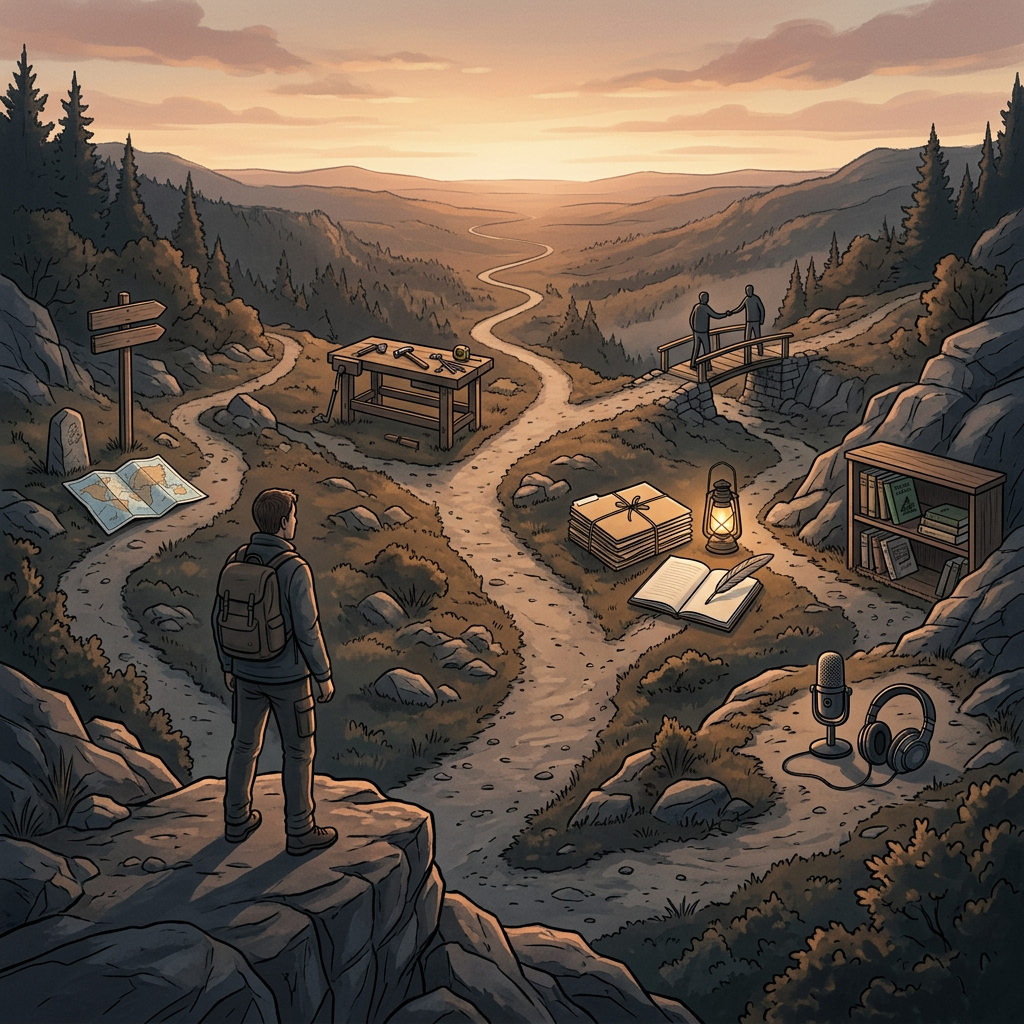
Standing on the Ledge is not several unrelated projects. It is one project with several doors.
Each door answers a different question.
The Starting Point: The Reader’s Guide
If you are new, overwhelmed by the archive, or unsure where to begin, start with the Reader’s Guide.
The Reader’s Guide is the main orientation point. It gives you a broad view of the project and helps you choose a starting place based on what is happening in your life now.
You are not expected to read the entire site in order. Standing on the Ledge is not a course you can fail by opening the wrong page. The Reader’s Guide exists so you can find the door that matches your present footing.
The Spine: The Core Thesis
The Core Thesis explains the central idea holding the entire project together:
Convert reaction into agency without pretending the system is fair.
Reaction is not failure. Panic, anger, shutdown, shame, over-explaining, imaginary arguments, sleepless nights, checking loops, and the urge to solve everything at once are understandable responses when the system is under load.
But reaction cannot remain the only operating system.
Agency means identifying the part of the situation that is actually yours to act on. It does not excuse what happened. It does not make unfair treatment fair. It does not transfer responsibility from the people or systems that caused harm.
It simply asks: What is the next move that belongs to me?
That question runs through every personal post, tool, case study, learning journal, and phase of the rebuild.
The Map: What Kind of Moment Are You In?
The Phase Map helps answer a different question:
What kind of moment am I actually in?
The phase model is not a ranking system. Phase 4 does not make someone better than a person in Phase 1. The phases describe footing, not worth.
- Phase 0 — Warning Lights: Pressure is building, but the visible break has not happened yet. This is where drift, unclear expectations, weak boundaries, ignored paperwork, body receipts, and quiet scope creep begin becoming expensive.
- Phase 1 — Impact and Stabilization: The hit has landed. The immediate work is stopping further damage, protecting essentials, documenting what matters, and avoiding irreversible decisions while the alarm is still ringing.
- Phase 2 — Traction: You are functioning, but the system remains unstable. This phase is about restoring movement through small, repeatable actions rather than one heroic attempt to fix everything.
- Phase 3 — System Repair: Short-term coping begins becoming durable structure. Routines, standards, boundaries, records, and working systems are strengthened so they can hold under pressure.
- Phase 4 — Gaining Territory: Stability creates room to plan, protect gains, build capacity, and make longer-range decisions. The collapse remains part of the story, but it no longer controls every page that follows.
People move back and forth between phases. Different parts of life can occupy different phases at the same time. You may be in Phase 4 at work, Phase 2 financially, and Phase 1 in a relationship.
If you slip, re-phase. Do not moralize.
The Workbench: What Can I Do Right Now?
Once you have some idea of your footing, the Tools & Protocols page becomes the workbench.
The Phase Map tells you where you may be. The workbench helps you decide what to do there.
This is where reflection becomes action: evidence ledgers, decision filters, money triage, boundary language, communication tools, stabilization methods, worksheets, quick cards, and practical ways to reduce pressure without creating another complicated system to maintain.
The Using the Tools series shows what happens when those tools leave the page and enter ordinary life. The examples are not drawn from a perfect life after every problem has been solved. They are used while working, tired, frustrated, financially stretched, waiting for answers, and still dealing with the situation that made the tool necessary.
A tool is only useful if it can survive contact with a real Tuesday.
Communication Under Load: When Other People Are Part of the Pressure
Some problems are not only about what happened. They are about what happens when people try—or refuse—to talk about it.
Communication Under Load is the conflict, clarity, boundary, and repair hub.
This is where Standing on the Ledge examines unclear expectations, bad communication channels, delayed answers, hot replies, avoidance, responsibility without authority, positions versus interests, identity threats, boundary failures, and the slow drift that turns a manageable issue into a conflict system.
If your mind has begun rehearsing accusations, defences, explanations, judgments, and imaginary conversations, The Inner Courtroom explores that survival response directly.
The goal is not to make every conversation comfortable. It is to make your communication clearer, more deliberate, and less likely to create new damage while you are already carrying the original problem.
Case Studies: What Larger Pattern Is Operating Here?
The Case Studies section steps back from the immediate event and examines the larger system around it.
A personal conflict may also involve role ambiguity. A workplace disagreement may contain transferred risk, invisible labour, responsibility without authority, or a communication climate that punishes clarity. A financial problem may not be explained by individual choices alone. A collapse that looks sudden may be the visible end of a pressure chain that developed over months or years.
The case studies are where lived experience becomes systems analysis.
They do not remove personal responsibility. They place personal responsibility inside the environment where decisions were actually made.
The Field Lab: Where Experience Meets Research
The Field Lab: Learning Journals is where the ideas behind Standing on the Ledge are tested against formal learning.
This section draws from psychology, sociology, criminology, communication and conflict management, and organizational behaviour. It examines concepts such as role strain, power, identity, labelling, group norms, institutional pressure, conflict styles, social structure, organizational culture, and the relationship between individual behaviour and the systems surrounding it.
The Field Lab is not an academic shelf bolted onto the side of the site. It is part of the same rebuild.
The personal posts identify what something felt like. The Field Lab asks what established theory can help explain it. The case studies look for the larger pattern. The tools ask what can be done with that understanding.
Experience raises the question. Learning sharpens the language. Application tests whether the idea is useful.
The Glossary: What Does This Language Mean?
Standing on the Ledge uses language drawn from several fields, but the site should not require a degree to understand it.
The Glossary & Language Notes explains recurring psychological, sociological, organizational, and conflict-management terms in plain language.
If a term helps name what is happening, it is useful. If it only makes the writing sound impressive while leaving the reader more confused, it has failed.
The Free Shelf: What Can I Keep Nearby?
The Free Resources page is the field shelf.
This is where printable tools, worksheets, quick-reference materials, and other resources can be saved or kept nearby for the moments when reading another long post is not what you need.
The work should remain usable after the browser closes.
The Personal Posts: Where the Work Began
The personal posts remain an important part of Standing on the Ledge.
They are field notes from inside the process. They show what the phases, tools, theories, and communication problems look like before they have been neatly organized into a framework.
The personal story is the doorway, but it is not the final destination. The larger purpose is recognition.
A reader may not have lost the same contract, faced the same financial pressure, worked the same hours, encountered the same conflict, or carried the same history. But they may recognize the sleeplessness, the uncertainty, the repeated checking, the anger, the shame, the pressure to explain, or the slow realization that an old way of functioning no longer works.
The details make the story honest. The recognizable condition makes it useful.
The Podcast: Another Way Into the Same Work
The Standing on the Ledge podcast episodes are not a replacement for the written work. They are another route into it.
Not everyone has the time, attention, or quiet to sit down and read a long post. People drive, work, clean, walk, build, repair, and sometimes simply need to look away from a screen.
The podcast adapts parts of the existing work into an audio-friendly format. The written archive remains. The audio expands access to it.
How the Pieces Work Together
If you want the shortest possible explanation, the structure works like this:
- The Reader’s Guide helps you find the right door.
- The Core Thesis explains the central movement from reaction toward agency.
- The Phase Map helps you identify your current footing.
- Tools & Protocols gives you something practical to do.
- Communication Under Load helps when conflict, ambiguity, or other people are part of the pressure.
- Case Studies reveal the larger systems and pressure chains.
- The Field Lab connects lived experience with research and formal learning.
- The Glossary keeps the language understandable.
- Free Resources gives you material you can save and use away from the site.
- Personal posts and podcast episodes show what the work sounds and feels like in real life.
You do not need to use every section at once.
You may arrive through a personal story, recognize yourself in it, use the Phase Map to name your footing, choose one tool, and leave. You may return later when conflict appears or when you are ready to understand the larger system.
That is enough.
The Point of the Site
The purpose of Standing on the Ledge is not to keep you endlessly reading about rebuilding.
It is to help you regain enough footing to return to your own life with a clearer understanding of what is happening and one honest move you can make next.
Name the phase. Choose the door. Take the next clean step.
You do not need to diagnose your whole life today.
You do not need to read the entire archive.
You do not need to pretend the system was fair.
You only need to identify where you are standing and what action genuinely belongs to you now.
That is how Standing on the Ledge fits together.
Godspeed.
Not a crisis service: Standing on the Ledge provides lived-experience writing, educational material, practical frameworks, and tools for reflection. It is not a substitute for medical, psychological, legal, financial, workplace, or crisis support. If you are in immediate danger, contact local emergency services. If you are thinking about self-harm, contact a crisis service in your area. In Canada and the United States, call or text 988.
Discover more from Standing on the Ledge
Subscribe to get the latest posts sent to your email.

