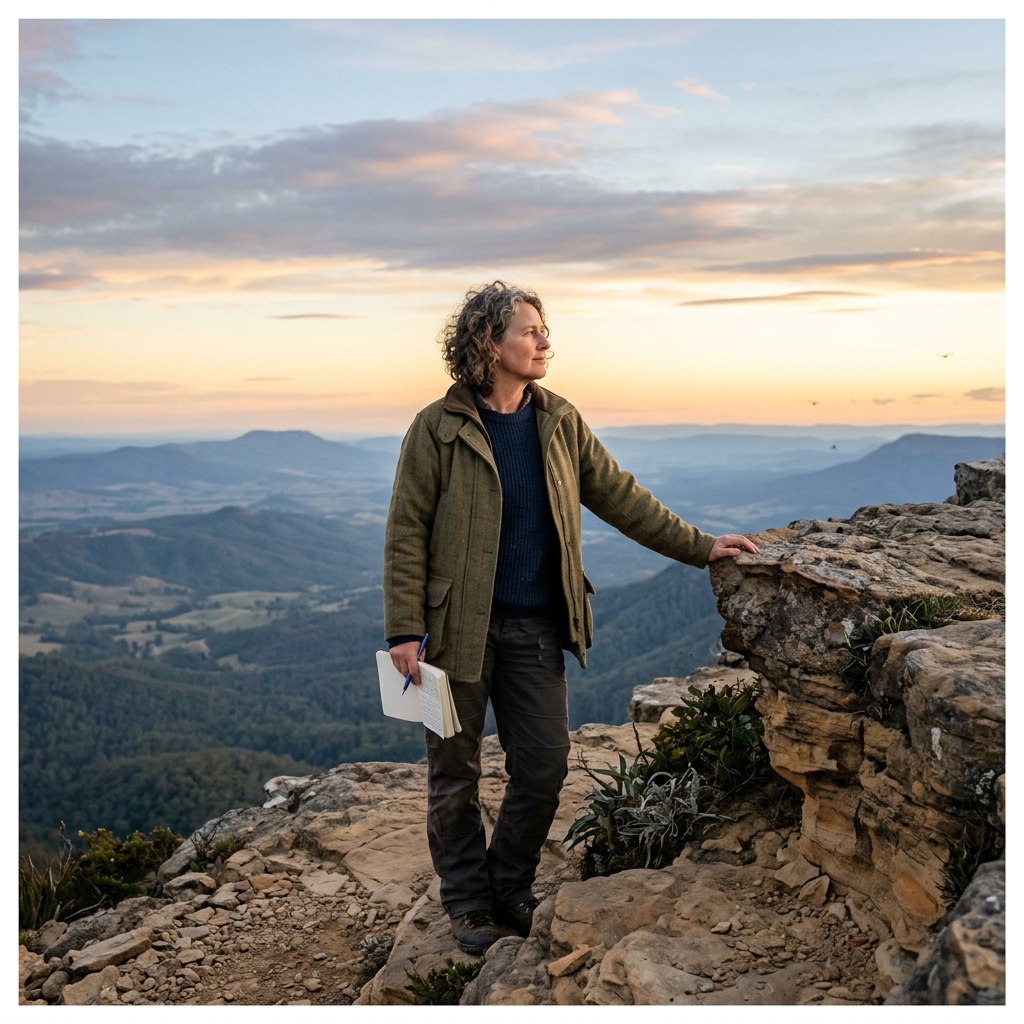

Standing on the Ledge now has 57 subscribers.
That is not a huge number by internet standards. Nobody is calling me from a publishing empire, I have not become an influencer, and I am reasonably certain there are house cats with larger online followings. But that number means something to me because this whole thing started on December 21, 2025, when life had rather unceremoniously deposited me in the rubble and I started writing about what happened next.
From then until now is just under eight months. Fifty-seven subscribers over that period works out to roughly 7.3 new subscribers every month. Growth has obviously not happened in a nice straight line, because almost nothing about this journey has happened in a nice straight line, but that is the average.
More importantly, 57 people have apparently decided there is enough value in what we are doing here that they want to see what happens next.
And quite a lot has happened next.
When this began, Standing on the Ledge was mostly me trying to understand what happens when a part of your life suddenly collapses. I was writing from inside it, not looking backward from some comfortable finish line. Somewhere along the way, however, the journal started becoming something else. We developed tools. We started identifying stages of collapse and recovery. We looked at triage, first footing, rebuilding systems, gaining territory, low-capacity days, behavioural activation, conflict, boundaries, work, identity, responsibility and all the strange psychological debris that tends to be scattered around after something important falls apart.
Some of those ideas came directly from experience. Others became clearer because I went back to school.
During this journey I completed two college courses: Communication and Conflict Management and Organizational Behaviour. They were not side projects completely separate from Standing on the Ledge. Quite the opposite. They gave me language for things I had already been experiencing.
Organizational Behaviour helped explain why workplaces and groups behave the way they do, why good people can operate badly inside dysfunctional systems, why change is difficult even when everyone knows change is necessary, and why motivation, leadership, culture, power and communication matter so much when people are under pressure.
Communication and Conflict Management added another layer. Collapse is rarely a purely individual event. Somewhere in the rubble there are usually other people: employers, employees, partners, family members, friends, institutions, clients, neighbours or somebody else whose needs, expectations, decisions and communication collide with our own.
That means rebuilding a life is not only about learning how to manage yourself. Eventually you have to learn how to deal with everybody else too.
Along the way, the writing itself grew into books. So far this project has produced three works dealing directly with collapse, recovery and rebuilding:
- Standing on the Ledge
- Standing on the Ledge: Field Manual — Rebuilding from the Rubble
- Walking the Ledge, the expanded third edition bringing the lived journey and field manual together.
That still feels slightly strange to write.
Back in December I was not sitting down with a five-year publishing plan. I was trying to figure out how to get through the next day without allowing one bad event to knock down everything else around it. The books happened because I kept writing, kept examining what was happening, kept testing ideas and, perhaps most importantly, kept moving.
Which brings me to something I have been thinking about lately.
I want to write the fourth book.
I already know there is more to explore. The journey has continued well beyond the material that went into the earlier books, and some of the most useful lessons have actually appeared during the rebuild rather than during the original collapse. There is another book sitting somewhere in all of that.
But I do not want to write it yet.
That is an unusual thing for me to say because one of the lessons of Standing on the Ledge has been that action matters. When something needs doing, eventually thinking about doing it has to become actually doing it. Momentum matters.
But momentum is not the same thing as rushing.
Sometimes the next move is not producing another thing. Sometimes the next move is becoming better equipped to produce it.
So before I release Book Four, I want to finish something else first.
I want to obtain my certificate in conflict management.
I want to continue taking courses. I want to deepen what I have already begun learning about communication, conflict, organizations, human behaviour and the ways people respond when pressure enters a system. Not because I suddenly want Standing on the Ledge to become an academic textbook, and certainly not because a certificate magically makes someone’s lived experience more legitimate.
It does something different.
It forces me to test what I think I know.
There is an enormous difference between experiencing something and understanding everything about it. Lived experience gives you a valuable view from inside the storm, but education introduces other people’s research, models, disagreements, terminology and evidence. Sometimes those things confirm what experience has taught you. Sometimes they explain it more clearly. Occasionally they tell you that something you were absolutely convinced about is incomplete or simply wrong.
That is useful.
One of the dangers of writing about recovery is eventually becoming too confident in your own map. You survive something, discover a few things that worked, and it becomes very easy to start believing you have discovered the way through rather than a way through.
I do not want Standing on the Ledge to become that.
The entire project has worked because it has remained a field journal from the messy middle. We try something. We observe what happens. We learn something. We change the tool when the tool does not work. We borrow useful ideas from psychology, sociology, organizational behaviour, conflict management or plain old lived experience when they help explain the terrain.
The certificate is therefore not a detour from this journey.
It is part of the rebuild.
There is another idea hiding inside that which may matter beyond what I am doing here. When we start recovering from something, there can be enormous pressure to prove that we are moving again. Get another job. Start another relationship. Launch another project. Write another book. Fix everything. Replace what was lost as quickly as possible.
But rebuilding is not simply replacing.
Sometimes rebuilding means strengthening the person who will be responsible for whatever gets built next.
That is where I think I am standing now.
I have the first courses behind me. I have 57 people following this strange experiment. I have three books that would not have existed if December had gone differently. I have a collection of tools that grew out of using them rather than merely talking about them. And I have enough experience now to recognize that there are still things I need to learn.
So the next honest move is fairly simple.
Keep studying.
Finish the conflict management certificate.
Keep writing here while I do it.
Keep testing what I learn against real life.
Then write Book Four from wherever I am standing when I get there.
And if you have been following Standing on the Ledge and would like to help me continue this work, there are a couple of very practical ways you can contribute.
You can purchase the most recent book, Walking the Ledge, which brings together much of what this project has learned so far about collapse, recovery and rebuilding. It is available through Amazon here:
Buy Walking the Ledge on Amazon
Or, if the writing or tools on this site have helped you and you simply want to contribute toward keeping the project moving, you can leave a donation through Buy Me a Coffee:
Support Standing on the Ledge on Buy Me a Coffee
There is no obligation attached to any of that. Reading, subscribing, sharing a post with somebody who might need it, or simply continuing to walk alongside me here matters too. Fifty-seven subscribers may not look like much on somebody else’s analytics dashboard, but from where I was standing in December, 57 people deciding to come along for the journey is something worth appreciating.
And any support that comes from this project will help me continue doing exactly what Standing on the Ledge has been doing from the beginning: learning, writing, testing ideas, building useful tools and documenting what happens next.
Because Standing on the Ledge was never supposed to be the story of somebody who figured everything out.
It is the story of what happens when you do not know exactly where the road leads, but you find the next piece of solid ground and put your foot on it anyway.
Right now, that next piece of ground has a certificate sitting on it.
So that is where I am headed.
Discover more from Standing on the Ledge
Subscribe to get the latest posts sent to your email.

