
Some words arrive late but sound as though they have been with us all our lives.
“It ain’t about how hard you hit. It’s about how hard you can get hit and keep moving forward.”
—Rocky Balboa
Those words come from Rocky Balboa, released in 2006. That creates a wrinkle in my memory: the exact speech did not belong to the period when I first discovered Rocky on VHS. Yet emotionally, it belongs on the same shelf. By the time I heard Rocky say it, the groundwork had already been laid by the films and books that had followed me for years.
I remember when watching a movie took more intention than tapping a title on a screen. A VCR could cost more than a thousand dollars. Video stores sold club memberships allowing so many rentals each month. Weekends cost more, and a new release carried another premium on top of that. You chose carefully. Renting a film was an event. You brought it home, watched it, rewound it and returned it. If it stayed with you after all of that, it had earned the space it occupied in your memory.
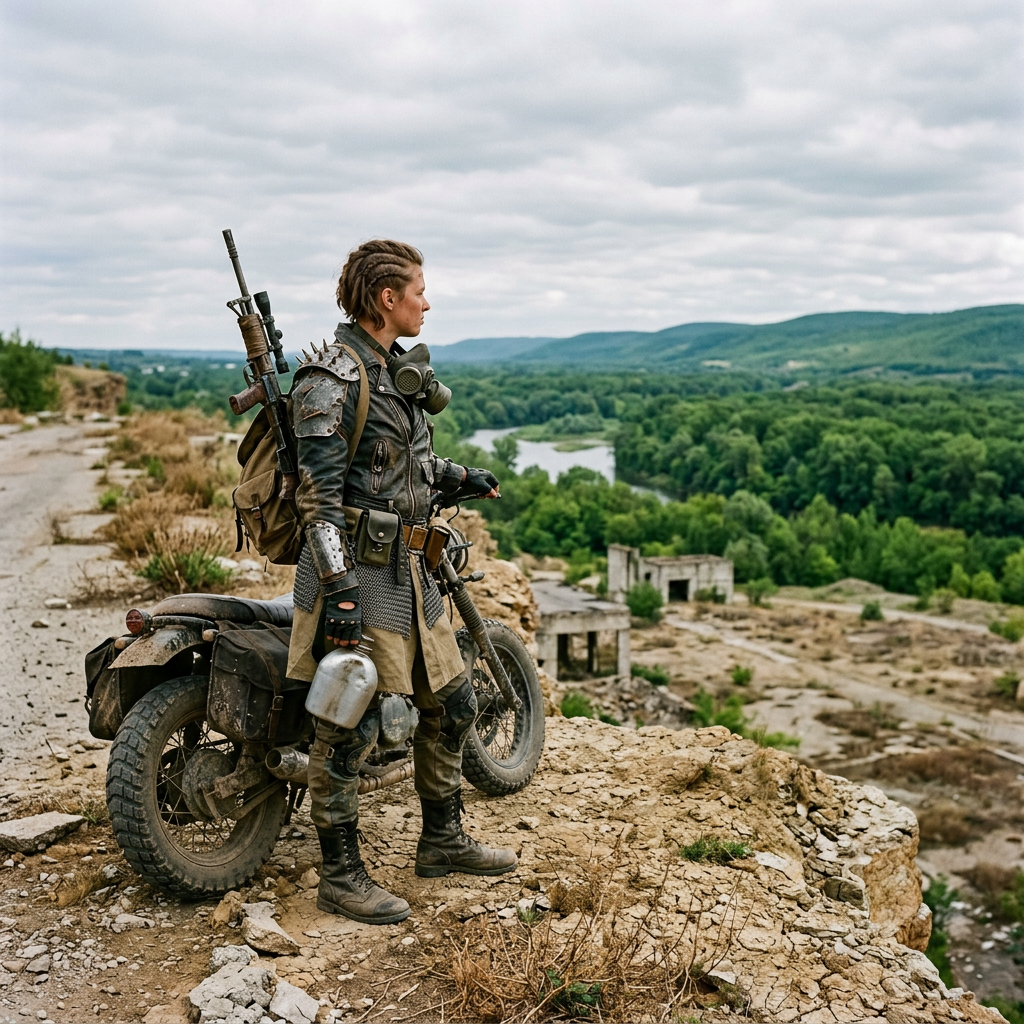
Some films from that era stayed with me. Mad Max. The Road Warrior. Rocky. First Blood and the Rambo films that followed. They looked like stories about fighting, speed, violence and survival. Underneath, however, they were asking harder questions. What remains of a person when the familiar world has been stripped away? What does strength look like when nobody understands what you have survived? When does survival become more than simply remaining alive?
The same questions followed me into books. John Wyndham’s The Chrysalids showed a community so frightened of difference that it called cruelty righteousness. David Robbins’s Endworld imagined people trying to defend a home after civilization had fallen. Stephen R. Donaldson gave us Thomas Covenant, a wounded, bitter and deeply flawed man who could not simply believe his way out of his condition. Anne McCaffrey wrote of people and worlds joined through skill, responsibility and bonds that carried real costs. In Crystal Singer, even the collapse of a life’s intended path could become the beginning of another life—though never without consequence.
Robert A. Heinlein returned again and again to competence, independence and the obligation to take responsibility for what happens next. Tolkien placed the fate of the world into the hands of people who were not the biggest, strongest or most important in the room. Terry Brooks’s The Sword of Shannara also began with an ordinary person forced to discover what was in him when an ordinary life was no longer available.
Looking at that list now, I see a pattern I could not have named when I first read and watched these stories. I was never especially interested in heroes who could not be hurt. I was drawn to people who had already been hurt: the outcast, the reluctant hero, the damaged veteran and the survivor who had lost a world and still had to decide what kind of person would walk into the next one.
That probably says something about me.
It says I have always suspected that character is not proven when conditions are comfortable. It is revealed when comfort is gone. It says I value competence, but not merely as a way to dominate a situation. Competence is how you keep the fire burning, protect the people beside you, repair what can be repaired and make it through one more night.
It says I distrust communities that demand conformity while calling it virtue. It says I believe damaged people still have worth, flawed people still have responsibilities and ordinary people can carry extraordinary weight.
Most of all, these stories tell me that I was never looking for an escape from life. I was rehearsing for it.
Every wasteland, ruined kingdom, rejected outsider and battered fighter offered the same quiet lesson: the world can change without asking permission. The life you expected can disappear. Institutions can fail you. People can misunderstand you. You can make mistakes that cannot be unwritten. None of that automatically makes you finished.
That is where motivation becomes something more honest than sunshine-and-rainbows encouragement. Moving forward does not mean pretending the blow did not hurt. It does not mean smiling while everything burns or claiming that every loss was secretly a gift. Sometimes life knocks you down and what happened was simply unfair, painful and real.
Moving forward means refusing to let the worst thing that happened become the final authority on who you are. It may mean standing up. It may mean crawling. On some days, it may mean staying alive long enough to try again tomorrow. Winning is not always a triumphant song playing while we run up a flight of steps. Sometimes winning is taking inventory of the rubble, choosing one thing that can still be saved and putting your hands to work.
Make the phone call. Set the boundary. Write the page. Repair the broken thing. Ask for help. Rest if rest is what allows you to continue. Then take the next step that is actually within reach.
I think that is why those old stories stayed with me. The technology changed. The video stores disappeared. The membership cards and rewind fees became relics of another age. But the need underneath the stories did not change. We still need to be reminded that being hit is not the same as being beaten, that being wounded is not the same as being worthless and that losing the old world does not remove our responsibility to help build whatever comes next.
Perhaps that was what I was renting all those years ago without knowing it: not merely a few hours of entertainment, but a rehearsal for the day life hit hard—and I had to decide whether the story ended there.
Discover more from Standing on the Ledge
Subscribe to get the latest posts sent to your email.

