
Date: Calendar week: July 14-July 20, 2026
Category: Field Lab Learning Journals > MGT2382 Learning Journal
Course link: MGT2382 Organizational Behaviour – Week 10: Leadership; McShane Chapter 12.
Lens: Critical lens: leadership is not proven by title, confidence, or image; it is proven by behaviour under pressure.
Opening reflection
This week’s material on leadership is useful because leadership is one of those workplace words that can become too polished to inspect.
Organizations talk about vision, inspiration, authenticity, transformation, and strategy. Those words are not meaningless, but they are not enough. A leader is not proven by the language around them. A leader is proven by the pattern of their decisions.
The real question is not whether someone looks like a leader. The real question is whether people become safer, clearer, stronger, and more capable under that person’s authority.
Leadership is behaviour under pressure
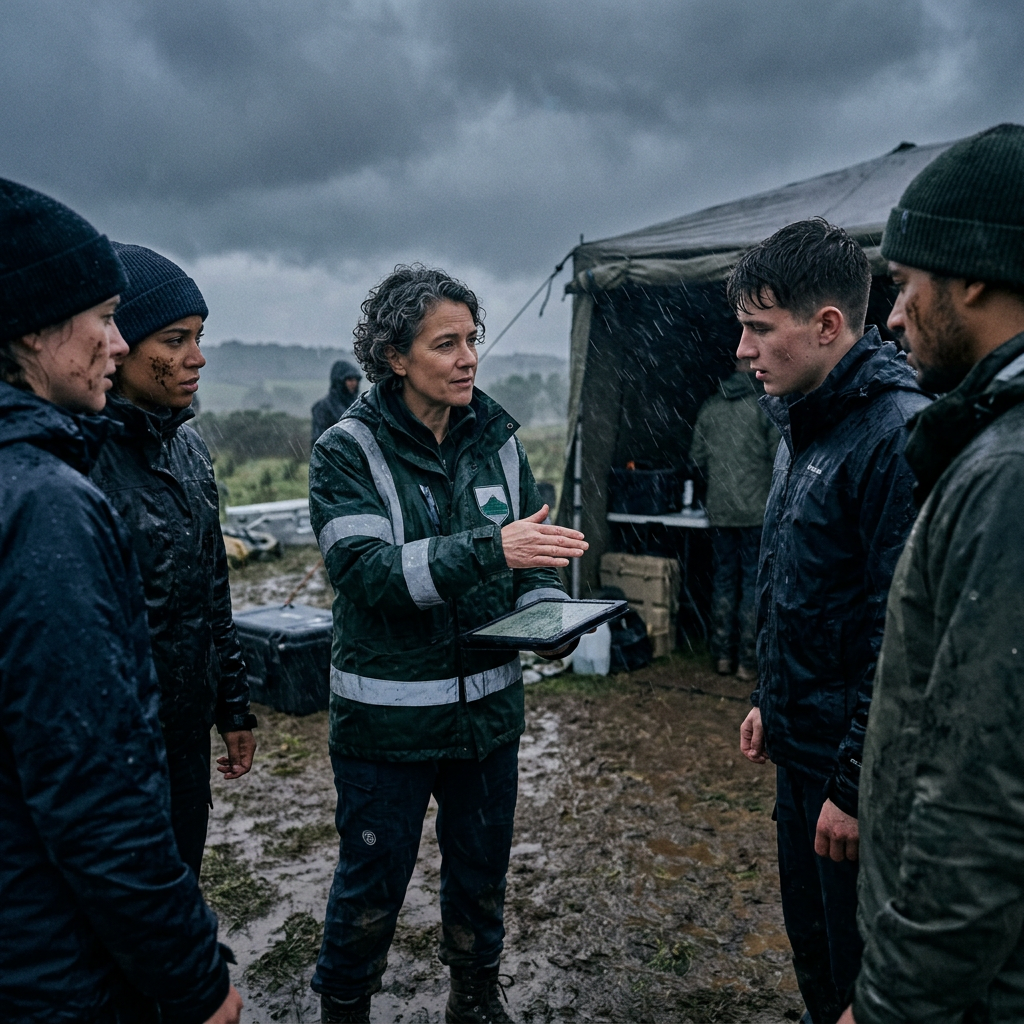
It is easy to look steady when the work is predictable, the budget is comfortable, and nobody is challenging the system. The real test comes when something breaks.
Pressure reveals the difference between leadership and performance. Who tells the truth? Who hides behind policy? Who protects the team? Who protects only themselves? Who accepts responsibility, and who sends responsibility downward?
That is where leadership becomes visible. Not in the motivational speech, but in the moment when honesty costs something.
Task-oriented and people-oriented leadership
Task-oriented leadership matters because work still has to get done. Deadlines, standards, clarity, and coordination are not optional. A leader who only offers warmth but no structure can leave people confused and unsupported.
People-oriented leadership matters because workers are not machines. They carry stress, identity, limits, skill gaps, personal pressures, and a need to be treated with basic dignity.
The strongest leadership does not choose one and abandon the other. It understands that people need structure and structure needs humanity. Without both, the organization either becomes chaotic or cold.
Transformational leadership and its risk
Transformational leadership can be powerful when it helps people connect their work to purpose, growth, and shared direction. A good transformational leader can help people see a larger reason for effort.
But this style has a risk. Purpose language can be used to demand sacrifice. A leader can turn “mission” into pressure, “family” into unpaid loyalty, and “commitment” into silence.
The test is whether the transformation is mutual and honest. Are people growing, or are they being emotionally recruited into carrying more than the organization is willing to acknowledge?
Authentic leadership needs correction, not just sincerity
Authentic leadership is attractive because people are tired of false polish. A leader who is honest, grounded, and consistent can build trust.
But authenticity by itself is not enough. A person can be authentically arrogant, authentically defensive, or authentically careless. Being real does not automatically mean being right.
Authentic leadership has to include self-awareness and correction. A leader should be able to hear feedback without treating it as betrayal.
Working application
My working test for leadership is simple: what happens to truth around this person?
If people bring information forward, admit mistakes, ask questions, and raise concerns, leadership may be creating safety. If people hide, soften, flatter, or stay silent, then the leadership environment is teaching them that honesty is dangerous.
That test can be applied before trusting leadership language. Watch what happens after bad news. Watch what happens when someone disagrees. Watch what happens when the leader is wrong.
Closing reflection
The main lesson this week is that leadership is not a personality costume. It is not volume, charm, confidence, seniority, or inspirational phrasing.
Leadership is the disciplined use of authority in a way that helps the work and protects the people doing it.
A healthy leader does not need to be perfect. But they do need to be accountable enough to learn, steady enough to tell the truth, and humble enough to understand that being followed is not the same thing as being right.
Field card
- One receipt: Leadership is behaviour under pressure, not image under calm conditions.
- One next step: When evaluating leadership, watch what happens to truth, bad news, and disagreement.
- One boundary sentence: “I can respect a leader’s role while still evaluating whether the leadership is healthy.”
Discover more from Standing on the Ledge
Subscribe to get the latest posts sent to your email.
 Standing on the Ledge