
Date: Calendar week: July 21-July 27, 2026
Category: Field Lab Learning Journals > MGT2382 Learning Journal
Course link: MGT2382 Organizational Behaviour – Week 11: Organizational Culture; McShane Chapter 14.
Lens: Critical lens: culture is not what an organization claims to value; culture is what people learn will be rewarded, punished, tolerated, and protected.
Opening reflection
This week’s material on organizational culture matters because culture is where the official story and the lived story often separate.
A workplace can say it values respect, teamwork, inclusion, honesty, and open communication. That may even be written into policies, posters, websites, and onboarding material. But the real culture shows up in behaviour.
The real question is not, “What does the organization say it believes?” The better question is, “What do people learn they must do to survive here?”
Culture is learned through consequences
People learn culture through repeated signals. They learn who gets promoted, who gets protected, who gets ignored, who gets blamed, and who is allowed to speak plainly.
They learn whether mistakes are treated as learning opportunities or as ammunition. They learn whether raising a concern is welcomed, punished, or quietly remembered. They learn whether the stated values have teeth.
This is why culture is stronger than slogans. Slogans describe what the organization wants to be seen as. Consequences reveal what the organization actually is.
Strong culture can help or harm
A strong culture can create belonging, identity, trust, and shared standards. It can help people make decisions without needing a rule for every situation.
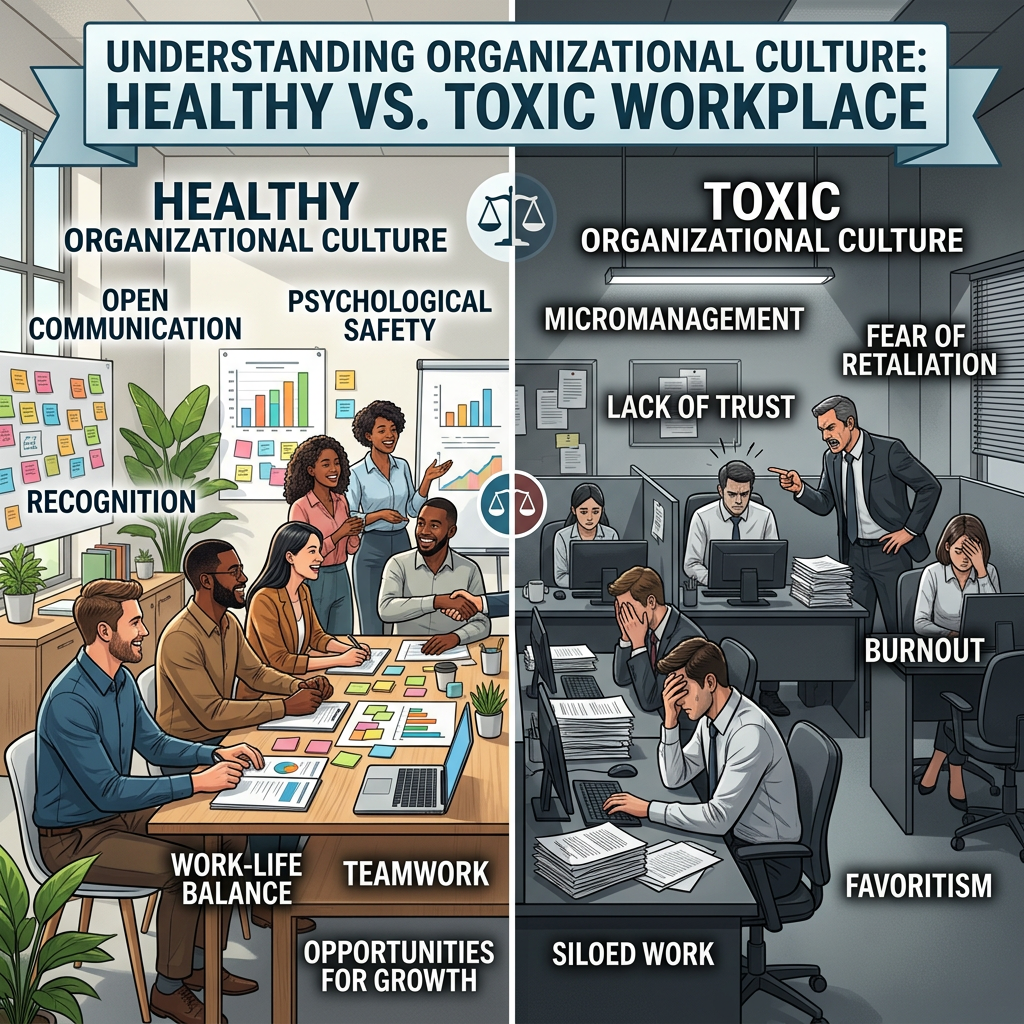
But strong culture is not automatically healthy. A strong toxic culture can normalize overwork, silence dissent, protect favourites, or make people feel guilty for having boundaries.
That is where the dark side of corporate cults becomes important. Belonging can become control when the organization asks people to trade judgment for acceptance.
Socialization teaches more than the job
New employees are not only trained in tasks. They are trained in what is safe. They learn the formal process, but they also learn the informal process.
They learn who really makes decisions. They learn which rules matter and which rules are decorative. They learn whether the organization wants thinking adults or obedient performers.
That informal learning can be useful when it helps people understand the workplace. It becomes dangerous when it teaches people to ignore their own judgment.
Culture and effectiveness
Organizational culture connects directly to effectiveness. A healthy culture can improve coordination, commitment, retention, decision-making, and trust.
An unhealthy culture creates hidden drag. People spend energy managing fear, politics, image, and uncertainty. They may still do the work, but they are carrying extra weight that the organization may not measure.
This is one reason culture problems are often underestimated. The cost is not always obvious at first. It shows up slowly in turnover, disengagement, conflict, silence, burnout, and lower quality decisions.
Working application
My working test for culture is simple: what gets protected when the organization is under pressure?
If the organization protects truth, fairness, safety, and accountability, the culture has a healthy foundation. If it protects image, hierarchy, convenience, or favourites, then the stated values are probably weaker than they look.
A culture audit should not start with the brand statement. It should start with lived experience: what happens when someone makes a mistake, tells the truth, asks for help, refuses unfair pressure, or challenges a decision?
Closing reflection
The main lesson this week is that culture is not proven by language. It is proven by repeated behaviour.
A healthy culture does not need to be soft, but it does need to be honest. It should allow people to do good work without surrendering their judgment or dignity.
The strongest organizational culture is not the one that demands the loudest loyalty. It is the one that remains trustworthy when loyalty is tested by reality.
Field card
- One receipt: Culture is what people learn is safe, punished, rewarded, and protected.
- One next step: Compare the organization’s stated values against what actually happens under pressure.
- One boundary sentence: “I am willing to belong, but not at the cost of my judgment.”
Discover more from Standing on the Ledge
Subscribe to get the latest posts sent to your email.

