
Reader’s Moment
Sometimes the hardest part of collapse is not the event itself.
It is carrying it unseen.
You want someone to understand what happened without taking over, judging, rescuing, minimizing, gossiping, or turning your pain into their platform.
You want a witness.
Not an audience.
Not a judge.
Not a saviour.
Not a person who needs you to perform your wound properly before they believe it.
A witness.
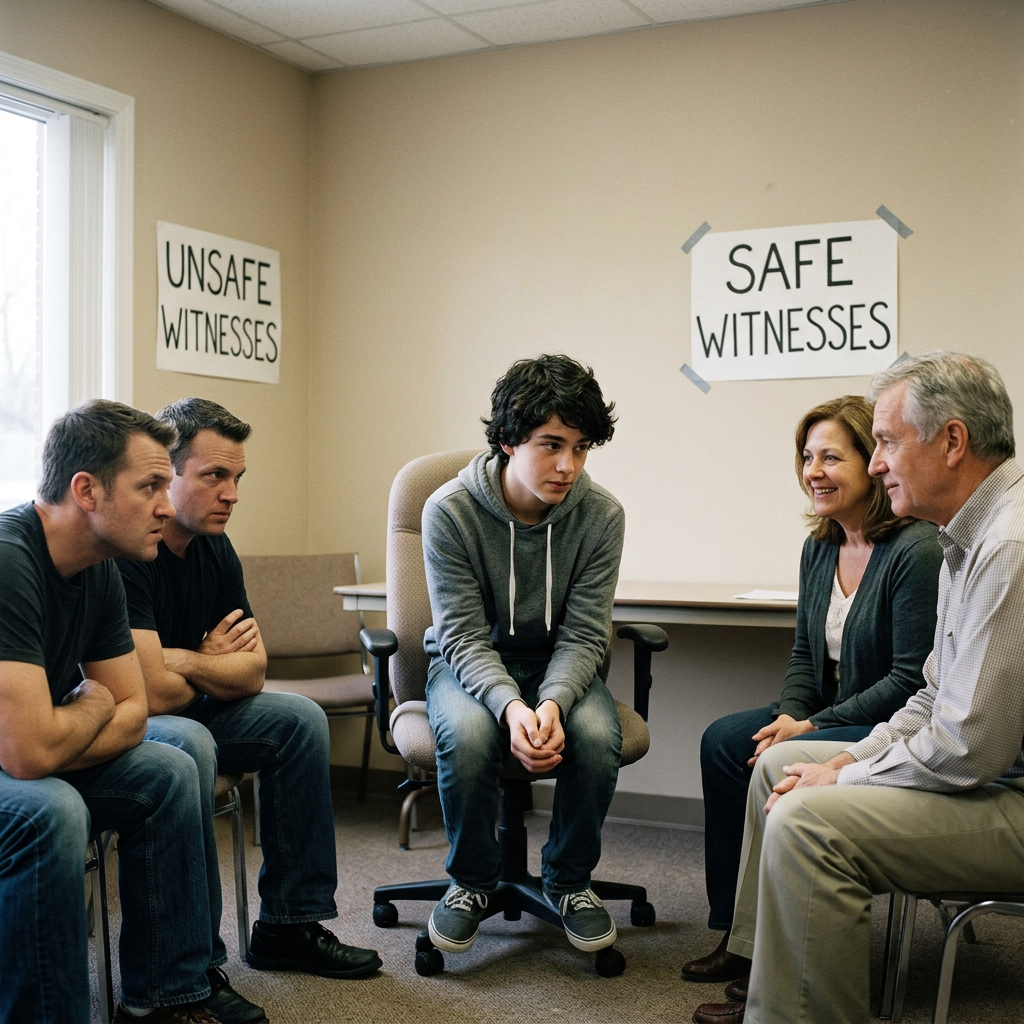
The problem is that not every witness is safe.
What a witness does
A witness helps reality stay real.
They listen without immediately rewriting the story.
They can say, “That happened,” without needing to make themselves the centre.
They may ask clarifying questions.
They may help you separate fact from interpretation.
They may sit beside you while you make a list.
They may remind you to eat, sleep, save the document, or wait before sending the message.
A witness does not have to agree with every conclusion you draw. In fact, a good witness may gently challenge distortion. But they do not use your vulnerable moment to dominate you.
A witness leaves you more oriented than they found you.
The rescuer
A rescuer looks helpful at first.
They rush in. They take charge. They make calls, send messages, offer plans, and tell you exactly what to do.
Sometimes immediate practical help is needed. But rescuing becomes dangerous when it removes your agency.
The rescuer may need to feel necessary. They may become offended when you do not follow their advice. They may decide that because they helped, they now own part of the decision.
Under pressure, being rescued can feel comforting.
Later, it may feel like another loss of control.
The audience
An audience consumes the story.
They want the details, the drama, the emotional arc, the villain, the reveal. They may react strongly, but their reaction does not necessarily help you stabilize.
An audience may validate you in the moment and still leave you more exposed afterward.
Not everyone who listens deserves details.
This is especially true online. Public attention can feel like witnessing, but attention is not the same as care.
The internet can watch you bleed and still not help you bandage the wound.
The judge
The judge wants a verdict.
They listen for fault. They ask questions that feel like cross-examination. They may focus on what you should have done, what you should have known, why you stayed, why you trusted, why you did not act sooner.
Some questions may eventually be useful. Timing matters.
In the first wave, judgment can drive a person deeper into shame before they have enough stability to learn anything.
A judge may believe they are promoting accountability. But accountability without care often becomes another injury.
The container
Sometimes the safest witness is not one person. Sometimes it is a container.
An Evidence Ledger.
A private journal.
A counsellor.
A lawyer.
A support group with clear rules.
A scheduled conversation with a trusted friend.
A post that speaks in pattern language rather than disclosure.
A tool that lets the experience become useful without exposing every detail.
Standing on the Ledge, at its best, is not an audience for personal collapse. It is a container for turning collapse into structure, language, and next steps.
When no safe witness is available
There may be nights when nobody available is safe enough for the full story.
That is painful. It is also information.
In that moment, the goal is not to force unsafe witnessing because the need is real.
The goal is to create a smaller safe container.
Write the facts.
Record the body receipts.
Use the S3 Protocol.
Send a limited ask:
“I do not need advice tonight. Can you sit with me on the phone for ten minutes while I calm down?”
Or:
“I am not ready to tell the whole story, but I need someone to know I am having a hard night.”
Or:
“Can you help me with one practical task tomorrow?”
A limited ask can protect you when full disclosure would be unsafe.
Choosing the witness
Before telling the whole story, ask:
Can this person keep confidence?
Do they respect boundaries?
Do they make crises about themselves?
Do they listen before advising?
Do they punish vulnerability later?
Do they leave me clearer or more scrambled?
Do they understand the difference between support and control?
If the answer is no, they may still have a role. They may be good for practical help, humour, a ride, or a simple task. But they may not be safe for the centre of the story.
The field rule
Need the witness. Honour the need.
But choose the witness carefully.
Not every listener is safe.
Not every helper helps.
Not every audience is care.
Not every judge is accountability.
When no safe person is available, use a safe container until one is.
Reality deserves to be witnessed without handing your wound to the wrong room.
Godspeed.
Field Manual Expansion Series: This post is part of a 20-part Standing on the Ledge sequence expanding the core tools, protocols, and pressure points behind the Field Manual.
Previous: Legal Silence Is Not the Same as Silence — [link previous post]
Next: The Checking Loop: When More Information Makes You Less Stable — [link next post once published]
Discover more from Standing on the Ledge
Subscribe to get the latest posts sent to your email.

