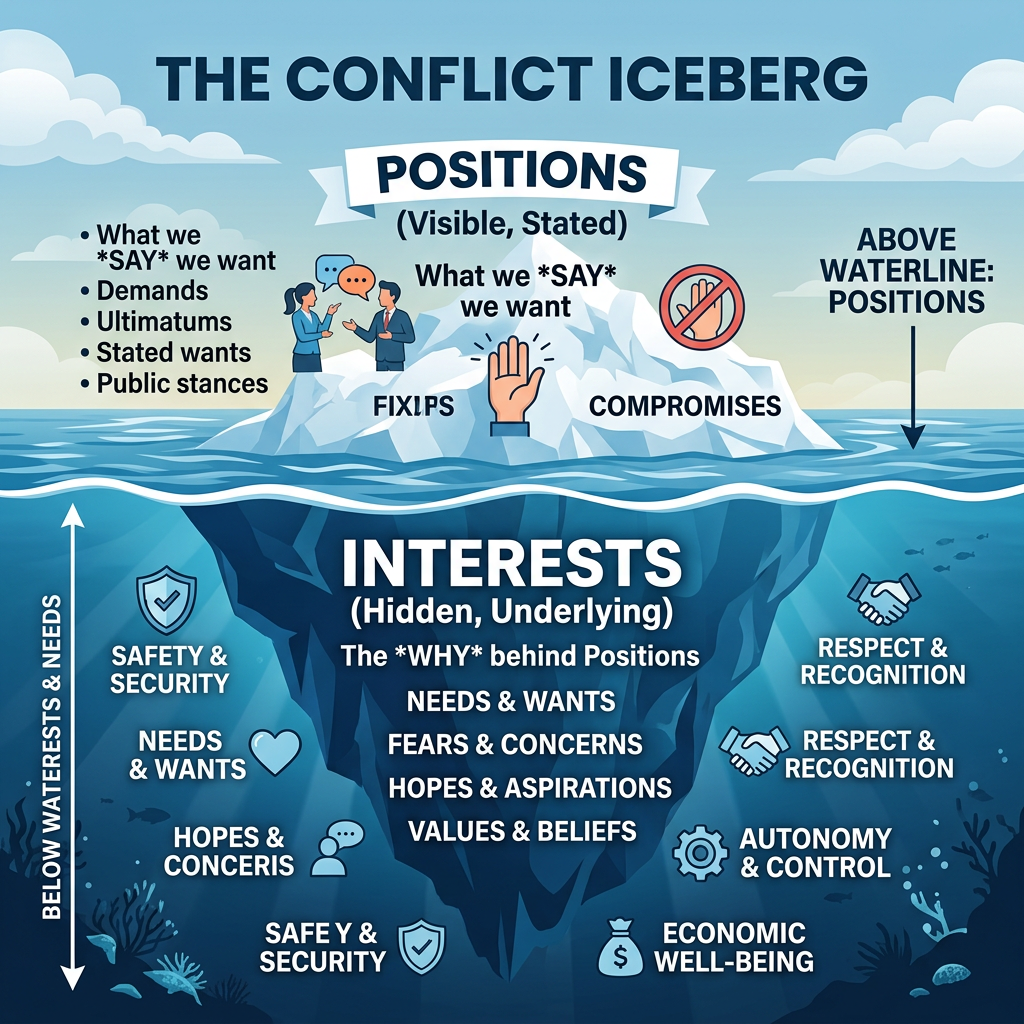

Reader’s Moment: The visible argument looks small, but it feels bigger than the facts should justify. That usually means the surface issue is carrying freight from somewhere deeper.
Why this matters: Because positions are what people say they want. Interests are what they are trying to protect.
From the Ledge: A lot of conflict gets stuck because people keep arguing the wrapper. They fight over who said what, who was included, who got copied, who got thanked, who spoke first, who showed up late. Sometimes that surface issue matters. Often it is also standing on top of something else.
Positions are the visible demands, complaints, or declarations. Interests are the underlying needs, fears, and concerns: respect, credibility, fairness, autonomy, belonging, status, clarity, security. When people feel one of those deeper things is under threat, they grip the position harder.
That is why some arguments go nowhere. One person keeps arguing the fact pattern while the other person is reacting to what the fact pattern seems to say about their worth, place, or future.
Examples
- Position: I should have been included in that meeting.
Possible interest: credibility, visibility, fair access, belonging. - Position: They are arrogant and do not listen.
Possible interest: respect, recognition of experience, fear of being displaced. - Position: I need this done my way.
Possible interest: control, predictability, accountability, fear of blame.
None of this means feelings erase responsibility. Accountability still matters. But if you only work at the level of positions, you can miss what is actually driving the fight. And if you miss that, you will keep solving the wrong problem beautifully.
Sometimes the best move is not agreement. Sometimes the best move is accurate diagnosis. Name the issue on the table. Then ask what value, fear, or need is making that issue burn so hot.
Positions vs. Interests Worksheet
Part 1 — My position
What am I saying I want?
Part 2 — My interest
What am I actually trying to protect?
- Respect
- Fairness
- Clarity
- Credibility
- Belonging
- Autonomy
- Security
- Recognition
Part 3 — Their visible position
What are they saying they want?
Part 4 — Their likely interest
What might they be trying to protect underneath the argument?
Part 5 — Reality check
- What are the facts?
- What assumptions am I making?
- Which part of this is fixable by structure?
- Which part of this needs a boundary?
- Which part of this belongs in a live conversation?
Godspeed.
Discover more from Standing on the Ledge
Subscribe to get the latest posts sent to your email.

