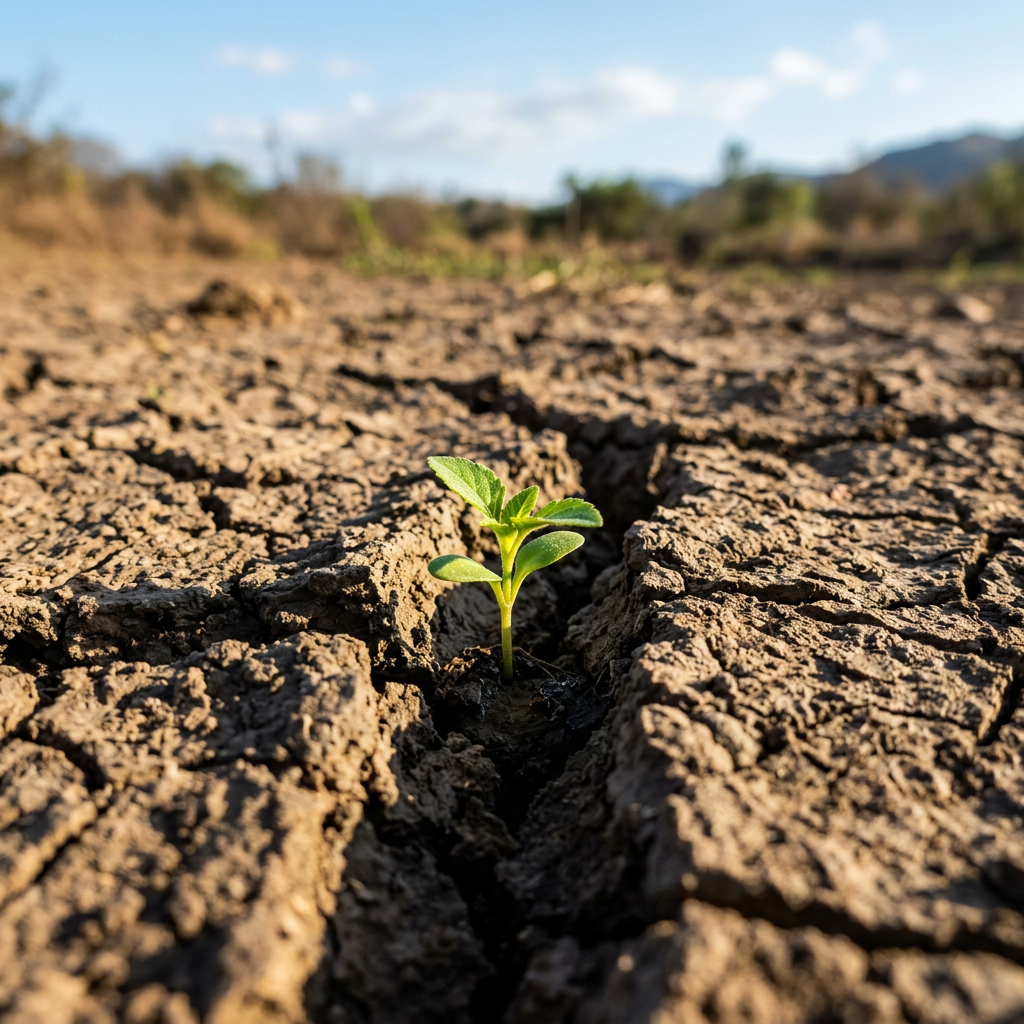

A reflection on Individual and Community Responses to Trauma and Disaster: The Structure of Human Chaos
There are some books that teach you something new, and there are others that give a name to something you have already lived through.
Individual and Community Responses to Trauma and Disaster: The Structure of Human Chaos, edited by Robert J. Ursano, Brian G. McCaughey, and Carol S. Fullerton, belongs to the second group for me.
This is not an easy book. It was written primarily for clinicians, researchers, administrators, and people responsible for responding to disasters. Its chapters examine war, terrorism, accidents, earthquakes, toxic contamination, floods, traumatic death, relocation, rescue workers, families, and entire communities placed under extraordinary stress.
The central idea is that disaster affects far more than the people standing at the centre of the event. It spreads outward through families, workplaces, support systems, responders, institutions, and communities.
I need to be clear about something from the beginning. I am not comparing the collapse of a business, the loss of employment, or a personal crisis with war, earthquakes, mass casualty events, or the other disasters examined in this book. The scale is entirely different.
But human beings do not experience loss as a mathematical equation.
The nervous system does not sit down with a chart and decide that one event is only ten percent as serious as another. It reacts to threat, uncertainty, helplessness, loss of control, and the sudden destruction of what had previously made life understandable.
That is where this book met me.
The Moment the World Stops Making Sense
When people hear the word disaster, they usually picture the event itself.
The explosion.
The collision.
The flood.
The announcement.
The termination.
The phone call.
But the event is only the beginning.
The real disaster often unfolds afterward, when the assumptions that held life together no longer work.
Before the event, tomorrow was connected to today. There was a routine, an income, a role, a place to go, and a reason to get out of bed. Even when life was difficult, it had a recognizable shape.
Then something happens, and that shape disappears.
You wake up the next morning in the same house and in the same body, but the world is no longer the world you went to sleep in.
That is human chaos.
It is not necessarily screaming, panic, or visible breakdown. Sometimes chaos looks remarkably ordinary from the outside. You make coffee. You answer messages. You fill out forms. You tell people that you are working on things. You may even appear calm.
Inside, however, the mind is trying to rebuild a map after the landscape has changed.
The book explores how emotional, behavioural, physical, and social responses following trauma are influenced by the nature of the event, a person’s history, social support, health, culture, sense of meaning, and ability to regain some control.
No two people, and no two traumatic events, are exactly alike.
That matters because we often judge people as though there is one correct way to respond.
There is not.
One person becomes highly active. Another freezes. One talks constantly. Another disappears. One begins planning immediately. Another cannot decide what to eat.
Some reactions fade as stability returns. Others remain quiet until something months or years later brings the original experience back to the surface.
The chaos has a structure, but it does not follow a simple schedule.
A Normal Response to an Abnormal Event
One of the most important ideas in the book is that many distressing reactions after trauma are not evidence that a person is broken. They can be a normal response to an abnormal event.
That changes the question.
Instead of asking, “What is wrong with me?” we can begin asking, “What happened to me, and what is my mind trying to do with it?”
Those are not the same questions.
The first assumes defect.
The second looks for context.
After my own collapse, I spent a great deal of time trying to understand why I could function in some areas and not in others. I could deal with an immediate emergency. I could work when someone needed something from me. I could solve practical problems under pressure.
But when the pressure stopped, so did I.
That seemed irrational at first. I thought recovery should mean gradually feeling better as the crisis passed. Instead, the quiet sometimes made things worse.
Looking at it through the framework of this book, that reaction makes more sense. During the crisis, survival provides structure. There are calls to make, documents to gather, bills to address, and immediate problems to solve.
The body has a job.
Afterward, the urgency fades, but the meaning of what happened has not yet been settled.
A person may be physically safe while still psychologically standing at the scene.
Disaster Is Never Entirely Individual
The title of the book deliberately joins individual and community responses. Trauma does not occur inside a sealed container.
People are affected by the event, but they are also affected by how others respond to the event.
Support can soften the impact.
Silence can deepen it.
Being believed matters.
Being included matters.
Having practical help matters.
Having someone recognize that your life has genuinely changed matters.
Communities can help restore stability, but they can also create a second injury. This happens when institutions minimize what occurred, when people become uncomfortable with grief, when support disappears too early, or when the person is expected to return to normal before a new normal has even been built.
The book also pays attention to rescue workers, helpers, researchers, families, and witnesses. They, too, can become part of the trauma community.
That point reaches well beyond formal disasters.
In everyday life, we often rely on the strongest person in the room without asking what that strength is costing them.
We praise the person who keeps working.
We depend on the person who stays calm.
We send problems toward the person who always solves them.
Then we are surprised when that person eventually has nothing left.
Strength is not the absence of injury. Sometimes strength is simply the ability to postpone the collapse until everyone else is safe.
Control, Meaning, and the Work of Recovery
Trauma takes away control.
Recovery does not necessarily mean taking back everything that was lost. Some things cannot be restored. Some relationships do not return. Some workplaces do not improve. Some communities never acknowledge what happened.
Some versions of ourselves are gone because the world that created them is gone.
Recovery begins when we regain control over something.
A routine.
A room.
A decision.
A boundary.
A page.
A morning.
A small promise made to ourselves and kept.
This may look insignificant to someone watching from the outside. To the person rebuilding, it is the first piece of solid ground.
The book’s subtitle, The Structure of Human Chaos, has stayed with me because it describes much of what I have been trying to do through Standing on the Ledge.
I have been giving chaos a structure.
The phases, tools, reflections, journals, timelines, and repeated attempts to understand what happened were not simply writing exercises. They were acts of reconstruction.
I was turning an experience that felt endless into something with stages.
I was turning confusion into language.
I was turning helplessness into observation.
I was turning pain into something that could be carried, examined, and perhaps used.
That does not mean everything has been resolved. Structure is not the same thing as closure.
A map does not shorten the road, but it can stop us from believing that we are wandering without direction.
Recovery involves creating meaning and structure from chaos. That does not mean inventing a comforting explanation for everything. It means making the experience understandable enough that human functioning can begin again.
Sometimes the meaning is not found in why the event occurred.
Sometimes it is found in what we choose to build afterward.
The Community We Become
One of the harder lessons in this book is that communities are revealed by disaster.
When the ordinary systems fail, we discover what those systems were really made of.
We discover who checks in after the first week.
We discover who helps without needing the story to be simple.
We discover which institutions protect people and which protect themselves.
We discover whether compassion is a value or merely a word printed on a wall.
We also discover that community is not automatically created by proximity. People can live beside one another, work together, or belong to the same organization without truly forming a community.
A community exists when people recognize that another person’s suffering places some responsibility upon them.
Not responsibility to fix everything.
Not responsibility to understand every detail.
But responsibility to avoid making the wound deeper.
At its best, community helps return predictability to a life that has become unpredictable. It provides witnesses, practical support, continuity, and reminders that the person still belongs somewhere.
At its worst, community demands that the injured person become invisible so everyone else can remain comfortable.
Standing at the Edge of the Pattern
I picked up this book expecting to read about trauma and disaster.
Instead, I found myself thinking about structure.
I thought about how a life can collapse without physically disappearing. I thought about how people can survive the event and still struggle with the aftermath.
I thought about how helpers become exhausted, how communities either contain chaos or multiply it, and how recovery often begins long before a person feels recovered.
Most of all, I thought about the human need to make something coherent from what has happened to us.
Chaos tells us that nothing connects.
Reflection begins reconnecting the pieces.
This does not make the disaster good. It does not excuse those who caused preventable harm. It does not require gratitude for suffering.
It simply refuses to let the event remain the final author of the story.
Perhaps that is the real work of recovery.
Not returning to the person we were before.
Not pretending that the damage never occurred.
Not forcing a lesson out of every wound.
But slowly building enough structure that life can move through the damaged place without being permanently trapped inside it.
The chaos may be human.
So is the impulse to give it shape.
Book referenced: Ursano, Robert J., Brian G. McCaughey, and Carol S. Fullerton, editors. Individual and Community Responses to Trauma and Disaster: The Structure of Human Chaos.
Discover more from Standing on the Ledge
Subscribe to get the latest posts sent to your email.

