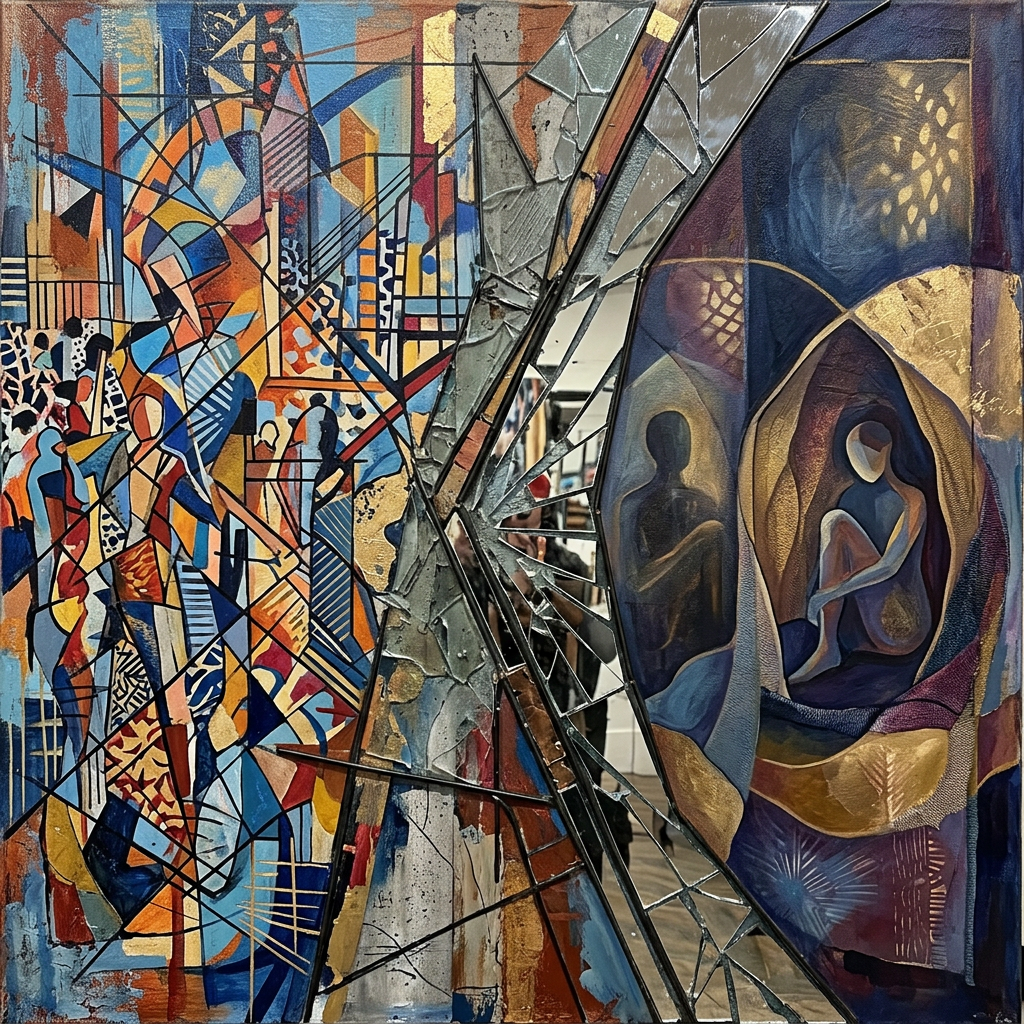

Some stories cannot be fully told while they are still moving through the machinery of consequences. That does not mean the work stops. It means the work has to become cleaner.
Reader’s Moment
Maybe you are carrying a story you cannot fully explain in public.
Maybe there are legal reasons. Maybe there are employment reasons. Maybe there are family reasons. Maybe there are safety reasons. Maybe naming names would create more damage than clarity. Maybe the people who hurt you are still connected to your money, your housing, your reputation, your work, your children, your case, or your future.
So you sit there with the biggest thing in the room pressing against your ribs, and you still have to live. You still have to write. You still have to rebuild. You still have to answer the question: what do I do with the truth when the full truth cannot be spoken yet?
That is where legal silence becomes a creative discipline.
Not silence as surrender.
Not silence as cowardice.
Not silence as pretending nothing happened.
Silence as containment.
Silence as boundary.
Silence as survival architecture.
Why This Matters for Standing on the Ledge
Standing on the Ledge was born from collapse, but it cannot become an evidence dump. That is not its purpose.
The work here is not to prosecute a case in public. The work is to extract tools from lived pressure so that another person standing in their own wreckage has something useful to hold onto.
That means the method has to stay disciplined:
- Pattern, not party.
- Tool, not allegation.
- Lesson, not revenge arc.
- Boundary, not courtroom detail.
- Public clarity, private record.
Legal processes may restrict specifics, but they do not have to stop the work. In fact, they can sharpen it.
When the full story cannot be safely told, the question changes. It is no longer, “How do I tell everything?”
It becomes:
What can be responsibly transformed into a tool?
The Legal Lens: Do Not Turn the Blog Into a Courtroom
This section is not legal advice. If you are involved in an active legal matter, listen to your lawyer. Do not use a blog post, social media update, newsletter, podcast, or public statement as a substitute for legal counsel.
But as a writing discipline, the rule is simple:
If it belongs in a legal file, it probably does not belong in a public post.
That does not mean you cannot write. It means you need a public boundary.
A public rebuild writer under legal pressure should avoid:
- naming parties involved in an unresolved matter;
- identifying people indirectly through obvious clues;
- posting documents, messages, contracts, screenshots, or private communications without advice;
- making claims that sound like factual findings before a process is complete;
- speculating about motives;
- inviting readers to judge, harass, contact, review-bomb, or punish anyone;
- turning updates into a running public trial.
The safer lane is not “say nothing.” The safer lane is:
I can speak about the human effect, the general pattern, the tool that came from it, and the boundary I am now practicing.
That is the Standing on the Ledge method.
The Psychological Lens: Silence Has a Cost
Let’s be honest about this: not being able to tell the full story hurts.
It can feel like being trapped behind glass while people guess at your life. It can feel like carrying proof no one is allowed to see. It can feel like being asked to remain professional while your nervous system is still standing in the wreckage.
That kind of silence has a psychological cost.
You may find yourself rehearsing arguments in your head. You may start composing posts you know you should not publish. You may feel the urge to explain, defend, correct, expose, or finally make people understand.
That urge is human.
But not every true sentence is a wise public sentence.
That is the hard part.
The body wants release. The mind wants coherence. The wounded self wants witnesses. The rebuilding self needs protection.
So the work becomes splitting the pressure into two channels:
- Private record: where the details, dates, documents, emotions, contradictions, and raw truth are preserved.
- Public reflection: where the pattern, lesson, tool, and boundary are shared without exposing the active matter.
This is not suppression. Suppression says, “Do not feel it.”
Discipline says, “Feel it fully, but do not hand the live wire to the internet.”
The Sociological Lens: Silence Is Never Just Personal
Silence does not happen in a vacuum.
People are often silent because power is uneven.
An employee may stay quiet because the employer has more money, more lawyers, more institutional credibility, or more control over future references.
A contractor may stay quiet because the next contract depends on reputation.
A family member may stay quiet because the family system punishes truth-telling.
A community member may stay quiet because belonging can be withdrawn.
A person in legal conflict may stay quiet because the public story and the legal story are not the same battlefield.
That is why “just tell your truth” can be careless advice.
Truth matters. But context matters too. Power matters. Timing matters. Consequences matter. Audience matters. Records matter.
From a sociological perspective, legal silence is not merely an individual emotional struggle. It is a negotiation with systems: law, labour, class, reputation, public image, institutions, and social power.
The person who cannot speak fully may not be weak. They may be reading the terrain.
And reading the terrain is survival.
The Standing on the Ledge Rule
Do not publish from the wound. Publish from the tool that survived the wound.
That one sentence may be the whole discipline.
The wound wants to name.
The tool wants to teach.
The wound wants the reader to pick a side.
The tool wants the reader to find footing.
The wound wants the story to be believed.
The tool asks, “What can someone use from this?”
That does not make the wound less real. It simply keeps the public work from becoming another fire to manage.
Tool: The Public Boundary / Private Record Split
When something legally sensitive happens, do not start with the public post.
Start with two documents.
1. The Private Record
This is not for the internet. This is for memory, counsel, documentation, and your own sanity.
Include:
- dates and times;
- names of people involved;
- what happened as specifically as possible;
- what was said or done;
- documents, messages, or references that may matter;
- your immediate emotional response;
- your practical next steps;
- questions for your lawyer or advisor.
Keep this factual. Keep it organized. Keep it private.
This is where the full record belongs.
2. The Public Reflection
This is what readers may see.
Include:
- the general situation without identifying details;
- the human impact;
- the pattern being noticed;
- the tool that came from it;
- the boundary now being practiced;
- what the reader can use in their own life.
This is where the lesson belongs.
Template: Safe Public Update Without Legal Detail
Use this when you need to acknowledge that something is happening without turning your public platform into a case file.
Something significant is moving in the background right now, and for legal / professional / privacy reasons, I cannot discuss the details publicly.
What I can say is this: the situation has reinforced the importance of documentation, boundaries, patience, and not letting one unresolved process consume the whole rebuild.
So rather than speaking about names, allegations, or specifics, I am going to focus on the tool that came from this moment: how to keep building while part of the story has to remain closed.
That is enough.
You do not owe the internet a live feed of your unresolved life.
Template: The SOTL Legal-Silence Post Frame
When writing under legal pressure, use this structure:
1. What happened in general?
Keep this broad.
A major professional disruption occurred.
A legal process is underway.
A difficult boundary had to be set.
A private matter reached a point where silence became necessary.
2. What can I say?
Name the safe lane.
I can speak about the stress of uncertainty.
I can speak about documentation.
I can speak about rebuilding while a process is unresolved.
I can speak about the discipline of not reacting publicly.
3. What can I not say?
Name the boundary without drama.
I cannot discuss names, documents, allegations, legal strategy, private communications, or details that belong inside the process.
4. What tool came from it?
This is the turn.
The tool is the Public Boundary / Private Record Split.
The tool is the No Speculation Rule.
The tool is the Pattern, Not Party method.
The tool is the Safe Update Template.
5. What can the reader use?
Bring it back to the person standing on their own ledge.
If you are carrying something you cannot fully explain, you can still document privately, speak carefully, protect your future, and turn the pressure into a usable practice.
Tool: The No Speculation Rule
Speculation is tempting because it gives the mind a feeling of control.
But public speculation is dangerous terrain.
Do not write:
- “They probably did this because…”
- “I think their real motive was…”
- “This was clearly planned…”
- “Everyone knows what they are like…”
- “I cannot prove it, but…”
Those sentences may feel emotionally satisfying. They may also create unnecessary risk.
Use this instead:
“I am not going to speculate on motive. I am going to focus on impact, documentation, boundaries, and the next responsible step.”
That sentence is boring in the best possible way.
Boring keeps you alive.
Tool: Pattern, Not Party
This is one of the central rules for Standing on the Ledge.
When you cannot safely name the party, name the pattern.
| Do Not Centre | Centre Instead |
|---|---|
| The person | The pattern |
| The company | The structure |
| The accusation | The lesson |
| The revenge arc | The rebuild tool |
| The courtroom detail | The public boundary |
For example:
Instead of:
“This specific person did this specific thing to me.”
Try:
“One of the hard lessons of collapse is that verbal understandings, old loyalties, and assumed stability are not enough. When pressure rises, documentation matters.”
That is the difference between exposure and extraction.
Exposure points at someone.
Extraction pulls out the lesson.
Tool: The Three-Ledger Method
When the pressure to speak becomes intense, split the material into three ledgers.
1. The Evidence Ledger
This is private. It contains dates, records, documents, messages, timelines, and facts.
Purpose: preservation.
2. The Emotion Ledger
This is also private. It contains grief, anger, fear, humiliation, betrayal, confusion, and the things you wish you could say.
Purpose: release.
3. The Public Tool Ledger
This is the only one that may become a post.
It contains patterns, lessons, questions, practices, boundaries, and reader-facing tools.
Purpose: service.
Before publishing, ask:
Which ledger does this sentence belong in?
If it belongs in the Evidence Ledger, do not publish it.
If it belongs in the Emotion Ledger, do not publish it yet.
If it belongs in the Public Tool Ledger, shape it carefully and make it useful.
The Emotional Cost of Staying Disciplined
There is a grief in not being able to tell the whole story.
There is grief in being misunderstood.
There is grief in knowing that the public version sounds smaller than the private reality.
There is grief in writing around the crater instead of pointing directly into it.
That grief deserves to be named.
Legal silence can feel like losing your voice at the exact moment you most need one.
But there is another way to understand it.
You are not losing your voice.
You are training it.
You are learning which voice belongs in the legal file, which voice belongs in the private journal, which voice belongs in prayer, which voice belongs in therapy or trusted conversation, and which voice belongs in public.
That distinction is not weakness.
That is craft.
That is discipline.
That is the difference between bleeding on the page and building something another person can stand on.
Book Fit: Notes on Writing From the Threshold
This belongs in the larger Standing on the Ledge framework because it deals with one of the hardest rebuild problems: how to keep creating while part of your life is unresolved.
The threshold is the place between collapse and conclusion.
You are not back where you were.
You are not fully through it.
The legal process may not be finished. The emotional process may not be finished. The financial process may not be finished. The identity process may not be finished.
And yet life does not pause.
The bills continue.
The body continues.
The work continues.
The writing continues.
So the threshold needs rules.
The Threshold Rules
- Do not publish what your lawyer should read first.
- Do not identify people through clever hints.
- Do not speculate about motive.
- Do not turn pain into a public accusation.
- Do not confuse silence with dishonesty.
- Do not confuse restraint with weakness.
- Do document privately.
- Do extract patterns.
- Do create tools.
- Do protect your future self.
Public Reflection Checklist
Before publishing anything connected to an unresolved legal, professional, or private conflict, ask:
- Have I named or clearly identified a person, company, client, group, or location?
- Have I included details that belong in a legal file?
- Have I made claims I cannot safely support in public?
- Have I speculated about motive?
- Have I posted from anger rather than clarity?
- Would this make my lawyer wince?
- Would this help a reader rebuild, or only help me vent?
- Can this be reframed as a pattern, tool, lesson, or boundary?
If the post fails the checklist, it is not dead.
It may simply belong in the private record first.
A Safe Closing Formula
When you do not know how to end a public update, use this:
For now, some parts of the story have to remain private. That is not avoidance. That is discipline. What can be shared is the tool: document carefully, speak cleanly, protect your footing, and do not let one unresolved process consume the whole rebuild.
From the Ledge
There are seasons where the most important sentence is the one you do not publish.
That is a hard lesson for any writer. Harder still for a public rebuild writer whose whole project is built around telling the truth from inside the rubble.
But truth does not require recklessness.
Truth can be held in layers.
One layer for the record.
One layer for the wound.
One layer for counsel.
One layer for the gods, the journal, the night drive, the kitchen table, the trusted witness.
And one layer for the reader.
The public layer does not have to carry everything.
It only has to carry what can be made useful without creating new harm.
The Tool
When the story has to stay partly closed, use this sentence as your anchor:
I will keep the record privately, speak the pattern publicly, and turn the pressure into a tool.
That is legal silence as creative discipline.
That is how the work continues.
Not by saying everything.
By saying what can be safely made useful.
Godspeed.
Discover more from Standing on the Ledge
Subscribe to get the latest posts sent to your email.

