
Ledgewalkers,
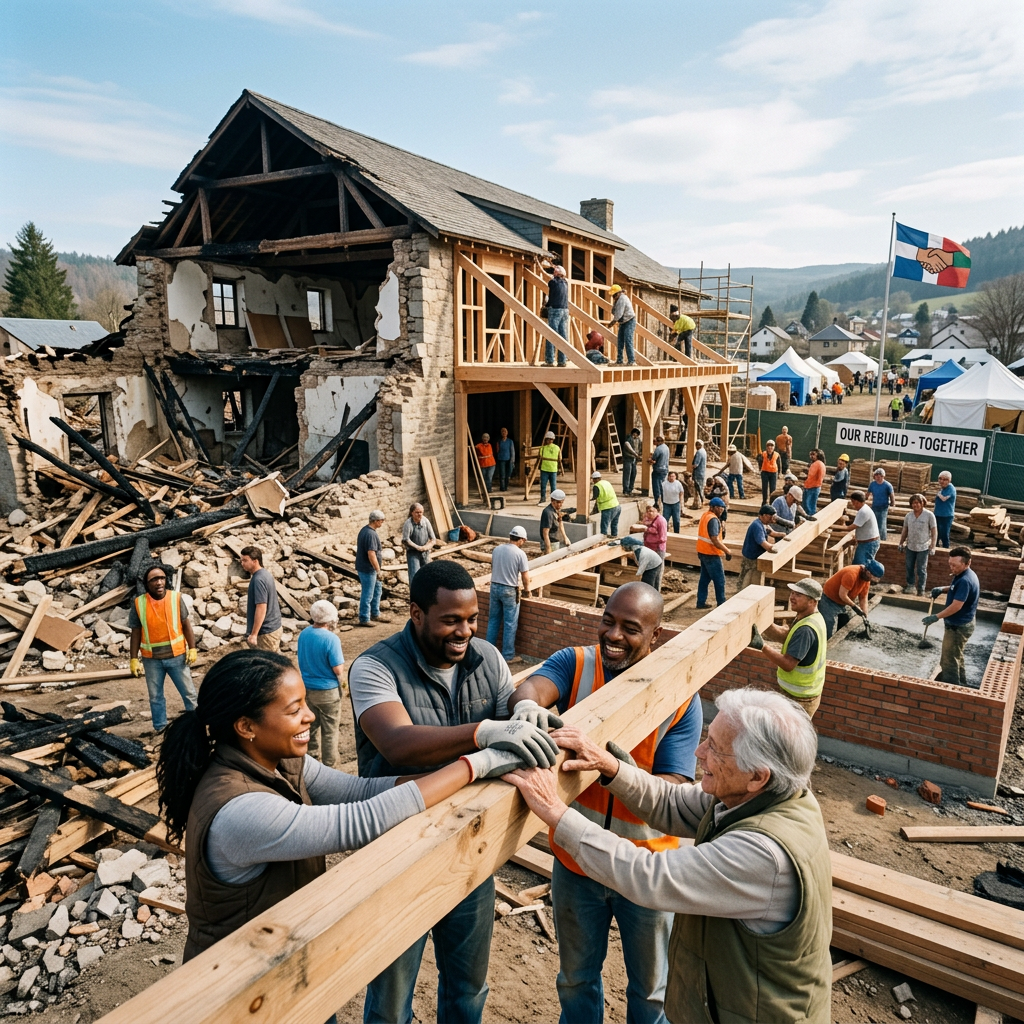
There comes a point in rebuilding when you have to stop asking what else needs to be added and start asking whether what you have already built can stand on its own.
I think Standing on the Ledge has reached that point.
When this project began, I was not trying to create a framework, a collection of tools, or a field guide for other people. I was trying to make sense of what had happened. I was trying to separate fact from fear, responsibility from shame, and loss from identity.
At first, the writing was personal because the collapse was personal. Work, routine, income, confidence, and direction had all become tangled together. When one part gave way, the rest did not remain neatly separated.
That is one of the things I have learned through studying communication and organizational behaviour: people do not enter difficult situations as blank pages. We bring our history, identity, expectations, stress, loyalties, fears, and assumptions with us.
The visible conflict is rarely the whole conflict.
The sharp email, the termination, the argument, the resignation, or the final conversation is often only the moment when everything that has been building underneath finally breaks the surface.
Before that point, there may have been unclear expectations, shifting responsibilities, silence, missing information, exhaustion, emotional restraint, and a growing gap between what a person was expected to carry and what they were actually given the authority or resources to control.
That gap can do serious damage.
For a long time, I looked at certain outcomes and asked what they said about me. Was I not capable enough? Did I fail to communicate? Should I have worked harder, stayed quieter, spoken sooner, or seen the ending before it arrived?
Those are difficult questions because they can sound like accountability while quietly becoming self-punishment.
Standing on the Ledge started to change when I began separating those two things.
Accountability asks:
What belonged to me?Shame declares:
Everything belonged to me.
Those are not the same statement.
Organizational behaviour has given me better language for understanding that distinction. People are influenced by motivation, ability, role clarity, resources, authority, workload, culture, communication, and the conditions around them. Personal choices matter, but choices are not made in a vacuum.
A person can be capable and still be placed inside an unworkable structure.
A person can be committed and still reach exhaustion.
A person can communicate clearly and still not be heard.
A person can make mistakes without becoming the sole cause of everything that went wrong.
That understanding became part of the foundation of SOTL.
When the Story Became a Framework
The site gradually moved from telling one story to naming patterns.
The ledge became a way to describe the place where the old structure has failed but the new one is not yet secure.
The phases became a way to decide what kind of action actually fits the moment.
The Evidence Ledger became a way to separate what can be shown from what fear is saying.
The Inner Courtroom became a name for the endless trial that can take place in our own minds.
One Handhold became a reminder that we do not need to solve the entire future before taking the next useful step.
These ideas came from experience, but they did not remain only mine. Once a pattern is named clearly enough, another person can recognize it in their own life.
That is where communication becomes more than sending words.
Real communication creates shared meaning.
When one Ledgewalker says, “I think I am back in Phase 1,” another person who understands the framework knows that this is not the time for grand plans or motivational speeches. It is time to stabilize, protect essentials, reduce further damage, and find the next handhold.
That shared language matters.
It gives form to experiences that can otherwise feel chaotic and private.
When More Is No Longer Better
It also carries responsibility.
SOTL cannot become another system demanding constant production. I do not need to keep adding new material simply to prove the project is active. I do not need to turn every thought, lesson, or difficult day into a published framework.
There is enough here now.
The work ahead is quieter.
It is about keeping the tools consistent, the pathways clear, and the resources usable. It is about making sure that someone who arrives overwhelmed can find what they need without having to sort through everything at once.
It is also about remembering that rebuilding is not measured by how much content I produce.
A pause is not failure.
Maintenance is not stagnation.
Protecting what has already been built is also progress.
The learning journals will continue because I am still learning. Communication, perception, motivation, stress, fairness, groups, leadership, and workplace behaviour all add depth to what SOTL has become.
But not every lesson needs to create a new room in the house.
Some lessons simply strengthen the walls.
Allowing the Structure to Hold
That may be where many of us eventually arrive in our own rebuilding.
At first, survival requires action.
Later, recovery requires structure.
Eventually, stability requires restraint.
You stop changing everything.
You stop reopening every wound.
You stop treating movement as the only proof that you are alive.
You look around and realize that the structure is beginning to hold.
And for the first time in a long time, you allow it to.
Discover more from Standing on the Ledge
Subscribe to get the latest posts sent to your email.

