
Hey there, Standing on the Ledge.
And hey there, Unplugged Pagans.
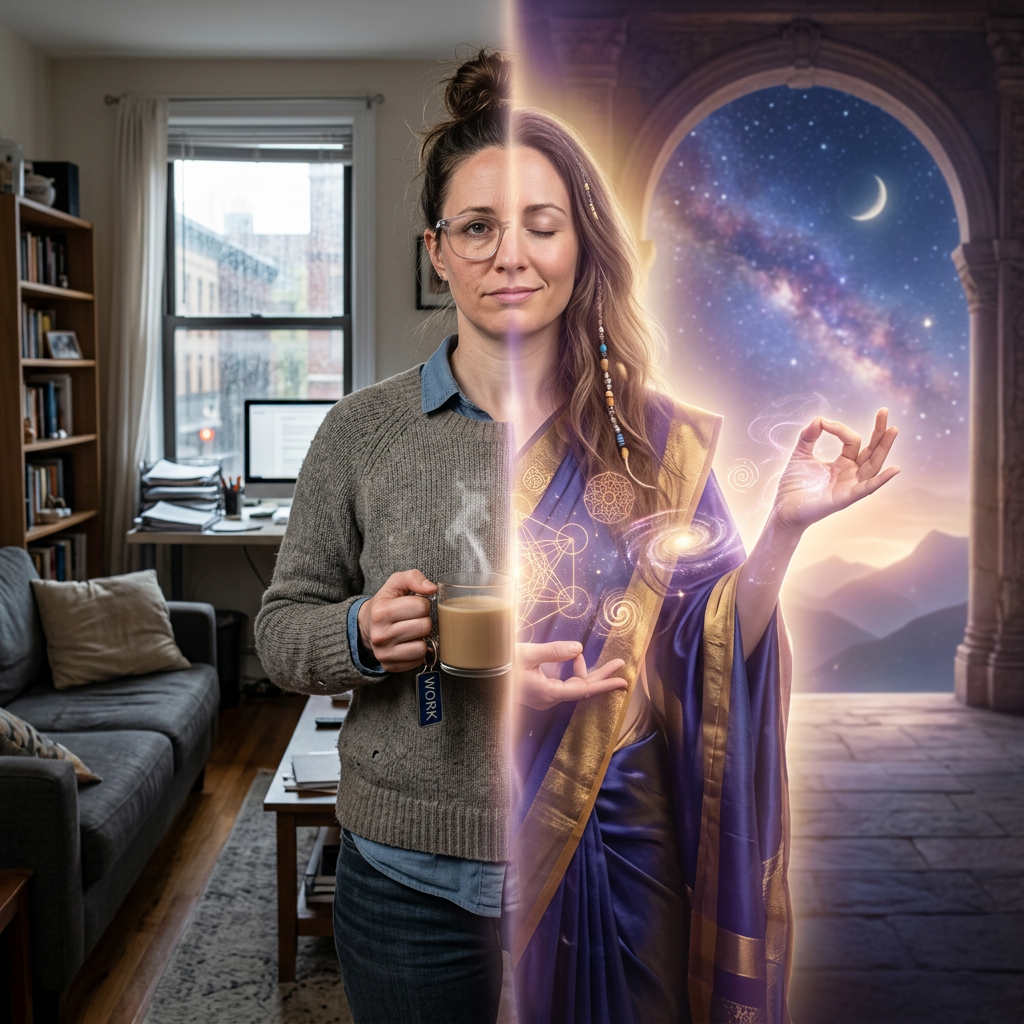
This one belongs to both circles, because it sits in the doorway between them.
The paperwork name and the inner fire name.
Kevin and Lugh.
The question is simple enough on the surface:
How does a person live as both without turning either one into a costume?
That is not just a pagan question.
That is a human question.
Most of us have more than one name, even if only one of them appears on paper. We have the name the government knows. The name family uses. The name employers recognize. The name friends shorten. The name we answer to in public. The name we carry in private. The name we become when the world is not watching.
For me, that split had a shape.
Kevin was the legal name. The public name. The work name. The mundane name.
Lugh began as something else.
Why Lugh Began
Lugh did not begin as performance.
He began as separation.
Kevin dealt with the ordinary world. The paperwork. The jobs. The bills. The contracts. The appointments. The day-to-day machinery of life.
Lugh belonged somewhere more hidden at first.
He was the name I used in pagan circles. The name that gave me room to speak from the spiritual side of my life without dragging every part of my legal identity into every room I entered.
There were practical reasons for that.
Anonymity mattered. Boundaries mattered. Not every circle needs every name. Not every part of the self has to be handed to every audience.
So Lugh became the craft name. The pagan name. The name used around ritual, tarot, Brigid, firekeeping, and the conversations that belonged closer to the hearth than to the office.
Kevin dealt with the muggle world, if you want to put it that way.
Lugh tended the fire.
Two Names, Two Rooms
For a while, that separation made sense.
Kevin could go to work, pay bills, answer emails, handle responsibilities, and move through the practical world.
Lugh could read tarot, honour Brigid, listen for signs, sit with ritual, speak the language of gods and symbols, and move through pagan space without apology.
There was comfort in that division.
There was safety in it too.
But over time, something started to shift.
The pagan community around me grew. The circles became less distant from ordinary life. The same people might know me in more than one context. One room would call me Kevin. Another would know me as Lugh. Sometimes I had to shift between the two on the fly.
And eventually, the shift stopped feeling like a costume change.
It became obvious that these were not two separate men.
They were two doors into the same house.
Integration Is Not Erasure
Integration did not mean Kevin disappeared.
It did not mean Lugh took over.
That would have been another kind of performance.
Kevin still has his place.
Kevin is the name on the bills, the documents, the work schedules, the legal forms, the public responsibilities, the ordinary burdens that must be carried whether the moon is full or not.
Lugh still has his place too.
Lugh is the firekeeper. The spiritual voice. The one who remembers that ritual is not decoration. The one who understands that symbols matter, not because they are props, but because they carry meaning across difficult terrain.
The point was never to choose one and kill the other.
The point was to stop pretending they were enemies.
The SOTL Lens
Standing on the Ledge has always been about rebuilding without performative positivity.
Not pretending everything is fine.
Not hiding the rubble.
Not polishing collapse into a motivational poster.
So from the SOTL side, this matters because identity after collapse can become unstable.
When life breaks, you start asking hard questions:
Who am I without the old role?
Who am I when the work changes?
Who am I when the story I was living no longer holds?
Who am I when the public name carries wounds the private self still has to process?
That is where integration matters.
Because rebuilding is not just about money, work, bills, health, and structure. Those things matter. Deeply. But underneath them is another question:
Can I live as myself without splitting myself into survival compartments forever?
Stable-ish is part of that.
Life is moving. Work is happening. Bills are being paid. The floor is no longer falling out every morning.
But rebuilding also means asking which parts of the self are allowed to come forward now that the emergency sirens have quieted.
The Pagan Lens
From the Unplugged Pagan side, this matters because pagan practice can easily become costume if we are not careful.
The cloak, the cards, the hammer, the candle, the altar, the name, the symbol, the god, the myth — all of it can become theatre if it is only worn for effect.
But it can also become deeply real when it is lived honestly.
I do not need to pretend Lugh is older in my life than he is.
I do not need to pretend the name arrived fully formed with thunder and prophecy.
I do not need to make the story more dramatic than it was.
Lugh began as a boundary.
Then he became a voice.
Then he became part of the whole.
That is enough.
Not every sacred thing needs theatrical lighting.
Sometimes the sacred enters quietly and stays because it does useful work.
Without Turning Either Name Into a Mask
The danger with any chosen name is that it can become another mask.
A prettier mask, maybe.
A stronger mask.
A more mystical mask.
But still a mask.
If Kevin becomes only the tired worker, the bill payer, the man carrying the legal documents and practical burdens, then Kevin becomes too small.
If Lugh becomes only the mystical figure, the tarot reader, the firekeeper, the pagan voice, then Lugh becomes too polished.
Neither one is the whole truth alone.
Kevin has fire in him.
Lugh still has to live in the real world.
That is the integration.
The paperwork name must not be reduced to drudgery.
The inner fire name must not be reduced to performance.
Ritual Belongs in the Real World
This is why Lugh became part of Standing on the Ledge.
Because ritual does not belong only in hidden rooms.
It belongs in the real world too.
Not as an escape from bills, work, legal stress, health scares, grief, exhaustion, or ordinary responsibility.
As a way of standing inside them without becoming only them.
Lighting a candle does not pay the mortgage.
Pulling a tarot card does not replace action.
Calling on Brigid does not erase the need to make the phone call, take the medication, write the document, go to work, or face the hard conversation.
But ritual can steady the hand that does those things.
It can remind the body that there is more to life than crisis management.
It can give shape to the pause before the next necessary step.
That is not fantasy.
That is footing.
Why Continue With Both?
So why continue with both names?
Because both still tell the truth.
Kevin is not a discarded shell.
Lugh is not a costume pulled from a spiritual closet.
Kevin is the man who has to live the ordinary day.
Lugh is the name that remembers the fire inside that ordinary day.
One keeps the lights on.
One tends the flame.
And most days, if I am honest, both are doing both.
For the Ledge Walkers and the Firekeepers
Maybe you have your own version of this.
Maybe not a pagan name. Maybe not a craft name. Maybe not anything spiritual at all.
But maybe there is a self you use in public and a self you only let breathe in private.
Maybe there is the person who goes to work and the person who writes at midnight.
The person who handles the family and the person who falls apart in the car.
The person who signs the documents and the person who still talks to the dead.
The person who looks fine and the person who knows exactly where the cracks are.
The work is not always to choose one.
Sometimes the work is to stop making them strangers.
Integration Without Performance
Integration does not mean explaining yourself to everyone.
It does not mean making your private name public before you are ready.
It does not mean turning your spiritual life into content, branding, theatre, or proof.
It means living with less internal exile.
It means letting the different rooms of the self communicate.
It means the worker can pray.
It means the firekeeper can pay bills.
It means the public name and the inner name can sit at the same table without one mocking the other.
That is where I am now.
Kevin and Lugh.
Not two costumes.
Not two performances.
Not two separate lives.
Two names.
One road.
One fire.
Still walking.
Godspeed.
Discover more from Standing on the Ledge
Subscribe to get the latest posts sent to your email.

