
Hey there, Standing on the Ledge. How are we all today?
Today was one of those annoy-the-hell-out-of-me kind of days. But buried inside the aggravation was a truth that explains a whole lot of what has gone wrong in the commercial cleaning industry.
There is an old rule in service work: you get to pick two things from a list of three. Done well, cheap, and fast. If you want it cheap and fast, it will not be done well. If you want it well and cheap, it will not be fast. If you want it fast and well, it will not be cheap. That is not negativity. That is reality.
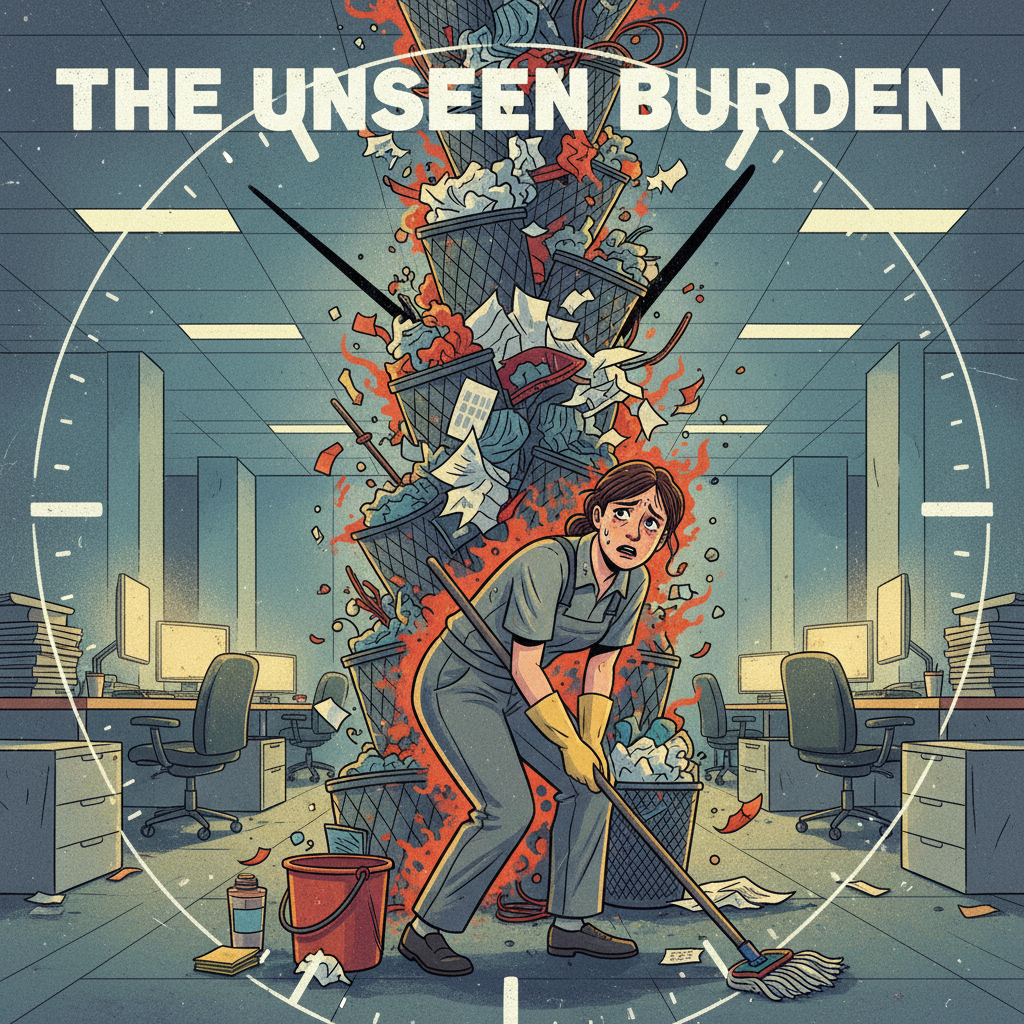
The problem is that too many companies now want cheap and fast, but still expect excellent. They want stripped labour budgets, rushed time windows, bare minimum staffing, and somehow still expect pristine results. That math does not math. It never has.
So here is the warning to clients and managers alike: if you keep buying cheap and fast, stop acting shocked when the quality slips. You cannot starve a job, rush a job, under-support a job, and then blame the worker when the outcome reflects the conditions you created.
Reader’s Moment
Maybe you know this feeling. Maybe you are the one being asked to carry a standard that the budget does not support. Maybe you are the one being told to move faster, do more, cover for others, smooth over problems, and somehow keep smiling while the expectations keep climbing. Maybe you are tired of being handed responsibility without authority, pressure without support, and blame without proper pay.
If that is where you are today, I see you.
From the Ledge
What really got under my skin today was not just losing the four-day weekend I had been looking forward to. It was the role confusion. I am an employee. I do my job, I do it well, and I show up. But if management has an issue with another employee’s work, that is management’s job to address. Do not hand it to me sideways and then pretend I am not being pushed into a supervisory role.
Because that is what happens in a lot of workplaces. They do not officially promote you. They do not officially pay you more. They do not officially give you authority. But they quietly start expecting you to manage personalities, correct standards, carry accountability, and absorb the tension. In other words, they want supervisor output for grunt pay.
No. That is not how this works.
If you want me to supervise, then call it what it is and pay it what it is. Otherwise, deal directly with your staff and leave me in the role I was hired to do.
The Sociological Lens
From a sociological standpoint, this is what happens when institutions try to squeeze more output from fewer resources. Labour gets compressed. Expectations stay high. Support gets thinner. Accountability slides downhill until it lands on the shoulders of whoever is competent enough to hold things together. The workplace starts running on informal pressure instead of formal structure.
That is how industries decay. Not always through one dramatic collapse, but through a thousand smaller distortions: understaffing, role blur, cost cutting, speed obsession, and the quiet normalization of asking workers to absorb the gap between what is promised and what is actually funded.
Commercial cleaning has been hit hard by that mindset. The sale is often made on price. The timeline is set by convenience. The labour is scheduled to the bone. Then everybody acts surprised when the final result does not match the fantasy. But quality is not magic. Quality is time, labour, training, equipment, and clear accountability. Strip those down, and the job will show it.
The Psychological Lens
Psychologically, this kind of environment wears people down because it creates double binds. You are told to care, but not given the authority to fix. You are expected to uphold standards, but not given the time or staffing to meet them. You are blamed for outcomes that were shaped upstream long before you ever touched the mop, machine, or checklist.
That creates frustration, resentment, and eventually detachment. A person can only be asked to hold contradictions for so long before something in them says, enough. Not because they are lazy. Not because they do not care. But because the system keeps demanding emotional and practical labour that it refuses to recognize honestly.
And that is the real danger. Not just burnout. Not just anger. But the erosion of dignity. The slow grind of being treated like you are responsible for everything while being valued like you are replaceable.
The Standing on the Ledge Lens
From the Standing on the Ledge lens, this is about boundaries and accurate naming. One of the fastest ways to lose yourself is to keep carrying weight that is not yours while telling yourself it is normal. It is not normal. It is common, but it is not healthy.
Part of rebuilding is learning to call a thing by its proper name. If they want leadership, that is leadership. If they want supervision, that is supervision. If they want emotional buffer, conflict management, quality control, and staff correction from someone who is supposedly just another employee, then they are asking for more than the title says.
Rebuilding your life does not just mean getting back to work. It means recognizing when a workplace is trying to draft your backbone, your competence, and your self-respect into unpaid service.
There comes a point where the right answer is not rage. It is clarity.
I am not refusing work. I am refusing confusion.
I am not refusing responsibility for my own job. I am refusing responsibility for roles I have not been given, authority I have not been granted, and pay I have not been offered.
That distinction matters.
Closing Thought
So if today felt like one of those days for you too, let this be your reminder: not every frustration is you being difficult. Sometimes it is your mind and body correctly identifying a rigged expectation. Sometimes the irritation is not weakness. Sometimes it is your internal alarm saying, this arrangement is not honest.
Cheap and fast is not the same as good. Responsibility is not the same as authority. And being dependable does not mean you should let other people quietly turn you into management without the title, the power, or the pay.
That is it for today.
Godspeed.
Discover more from Standing on the Ledge
Subscribe to get the latest posts sent to your email.
 Standing on the Ledge