The author expresses deep personal struggles amid a chaotic world, feeling disconnected and anxious about the future. They reference literature and societal issues, emphasizing the need for connection and support. The message culminates in a plea for acknowledgment from others, highlighting the importance of shared understanding during difficult times.
Month: January 2026
Navigating Uncertainty: A Journey of Solitude
The post reflects on the author's struggles as they navigate the termination of a business contract and their uncertainty about the future. Snowy weather amplifies a somber mood, filled with feelings of betrayal and disillusionment. The author seeks solace and hopes for guidance from a deceased friend while contemplating life's complexities.
Deciding Between Job Offers: Key Considerations
The writer reflects on their decision to limit AI influence in personal thought processes, emphasizing the importance of maintaining control over their own thinking. They report progress through small tasks and discuss uncertainties related to a job opportunity, the necessity of completing paperwork, and their efforts to reduce exposure to negative world events.
Mastering the Art of Asking for Help Without Chaos
Help Without Collapse- Chapter 3 continued Asking for help can trigger guilt, pride, or fear. This is how I make requests that stay specific—and don’t invite chaos. I’ve learned the hard way that “asking for help” isn’t one skill. It’s three different fights at once: Guilt: “I’m a burden.” Pride: “I should handle this.” Fear: … Continue reading Mastering the Art of Asking for Help Without Chaos
My Journey Through Conflict Styles and Solutions
My Conflict Style Scorecard: What I Actually Do Under Pressure I did a conflict-management styles activity and scored myself across five modes: Avoid, Compete, Accommodate, Compromise, and Collaborate. I’m not treating this like a personality label. It’s more like a snapshot of what I tend to reach for when tension shows up — especially when … Continue reading My Journey Through Conflict Styles and Solutions
Master Your Reputation: The Two-Minute Reset
Standing on the Ledge — Chapter 3 (Continued) The Two-Minute Reputation Reset This is a tool for the moment when I need to explain “what happened” without oversharing or self-erasing. It’s built for interviews, networking, and tense conversations—when stress makes me ramble, apologize too much, or improvise my history. Why this works (the theory in … Continue reading Master Your Reputation: The Two-Minute Reset
Lessons from a Sleepless Night: Contracts and Life Friction
Personal Log — 3:30 AM (I’ll post this later) It’s 3:30 in the morning as I start dictating this. I’m not posting it now—partly because I don’t want to be spammy, and partly because my brain is still running too hot to trust what comes out in real time. I can’t sleep. I’m yawning as … Continue reading Lessons from a Sleepless Night: Contracts and Life Friction
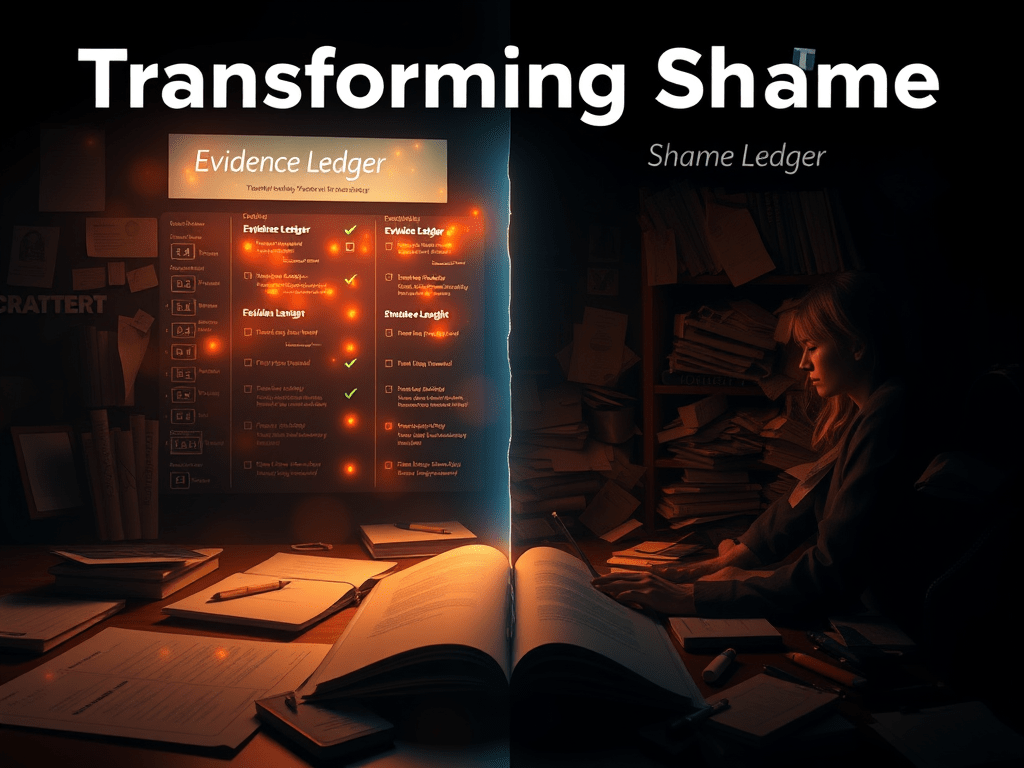
Transforming Shame: The Evidence Ledger Approach
The content explores the dichotomy between the Evidence Ledger, which documents measurable achievements, and the Shame Ledger, which focuses on self-identity and flaws. It emphasizes transforming shame into actionable evidence to foster self-worth, encouraging concrete actions for personal growth and emotional healing while proposing a structured approach to manage these internal narratives.
Navigating Emotional Work Challenges: A Log Entry
Personal Log — “Blech. What a day.” Standing on the Ledge — Rebuilding from the Rubble Today felt like one of those days where everything technically happens, but nothing lands. I’m still stuck in that 3–4 a.m. loop, and it’s starting to cost me. When I’m waking up late, the day doesn’t feel like it … Continue reading Navigating Emotional Work Challenges: A Log Entry
Three Effective Strategies to Manage Life’s Friction
The Friction Audit involves analyzing personal life for inefficiencies and distractions, much like an organizational audit. The author identifies three major friction triggers: morning fog, boundary violations, and communication noise. To combat these, they propose simple strategies like completing small tasks and setting clear boundaries to enhance productivity and reduce decision fatigue.