The blog "Standing on the Ledge, Rebuilding from the Rubble" shares personal insights into navigating life's challenges, including job loss and emotional struggles. It emphasizes consistency in training—both for animals and humans—while reflecting on a significant anniversary of loss. The author encourages resilience, focusing on present actions to build peace and avoid being trapped by nostalgia.
Category: Field Notes
Rebuilding from the Rubble: A Journey of Growth
In "Standing on the Ledge," the author reflects on recent challenges, including managing heating issues during extreme cold and addressing a chargeback from a previous employer. They discuss personal growth through Tarot insights and the importance of fairness in relationships and exchanges. Amidst external protests, they celebrate small victories, highlighting ongoing rebuilding efforts.
Rebuilding from Regret: A New Morning Ritual
The author shares a shift in perspective from despair to proactive living, emphasizing resilience and self-reflection through rituals like tarot readings and horoscopes. They explore their emotional weight from past regrets, advocating for smaller, manageable steps towards personal growth. The message encourages building supportive structures and setting boundaries to alleviate overwhelm.
Reflections on Sibling Loss: A Personal Journey
The author reflects on the profound impact of their brother's death at the age of fifteen, occurring during a high school exam period. This tragic event reshaped their life, mental health, and familial dynamics, highlighting the complex interplay between personal trauma and institutional experiences in grief. Recovery remains an uncertain journey.
Transforming Night Owl Habits for Better Sleep
The author reflects on their recent life changes, including a job loss and challenges in adjusting to a daytime schedule after being a night worker. They discuss the impact on their sleep, household dynamics, and coping strategies, emphasizing the difficulty of transitioning roles in a shared living environment.
Solitude vs. Isolation: How to Tell Which One You’re In
The post explores the differences between solitude and isolation, emphasizing that solitude is a chosen, restorative experience while isolation is an imposed state that can drain one’s spirit. It offers practical steps to transition from isolation to empowerment through small rituals, maintaining connections, and creating structured tasks to enhance well-being.
Mastering the Art of Asking for Help Without Chaos
Help Without Collapse- Chapter 3 continued Asking for help can trigger guilt, pride, or fear. This is how I make requests that stay specific—and don’t invite chaos. I’ve learned the hard way that “asking for help” isn’t one skill. It’s three different fights at once: Guilt: “I’m a burden.” Pride: “I should handle this.” Fear: … Continue reading Mastering the Art of Asking for Help Without Chaos
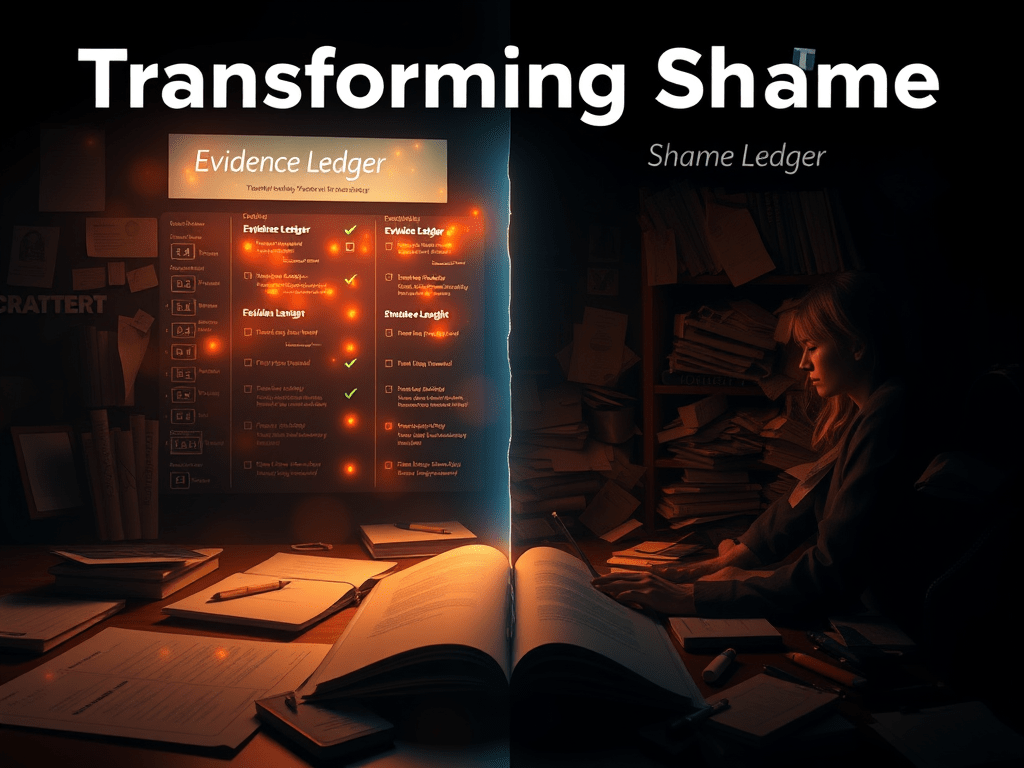
Transforming Shame: The Evidence Ledger Approach
The content explores the dichotomy between the Evidence Ledger, which documents measurable achievements, and the Shame Ledger, which focuses on self-identity and flaws. It emphasizes transforming shame into actionable evidence to foster self-worth, encouraging concrete actions for personal growth and emotional healing while proposing a structured approach to manage these internal narratives.
Three Effective Strategies to Manage Life’s Friction
The Friction Audit involves analyzing personal life for inefficiencies and distractions, much like an organizational audit. The author identifies three major friction triggers: morning fog, boundary violations, and communication noise. To combat these, they propose simple strategies like completing small tasks and setting clear boundaries to enhance productivity and reduce decision fatigue.
Inventory Before Identity: A Guide to Rebuilding Confidence
Chapter 3 emphasizes the importance of conducting an inventory of personal assets after a crisis before defining one's identity. It encourages assessing skills, tools, and networks while identifying gaps. This inventory helps rebuild credibility and self-efficacy, transforming experiences into usable resources and guiding future actions effectively.